Ancient Dinosaur Fossils Reveal Preserved Molecular Signatures of Blood
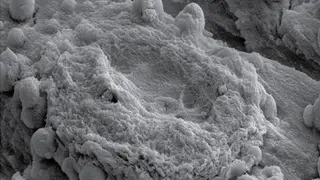
Fossilized bones from an Early Cretaceous theropod dinosaur, Aratasaurus museunacionali, contain chemical traces of hemoglobin and red blood cell remnants dating back 115 million years. Researchers detected heme B and its derivative, 3,8-diethyl heme B, within mineralized structures in the bone’s vascular canals, suggesting preservation through manganese oxide minerals. This discovery challenges previous assumptions about biomolecule longevity and opens new pathways for studying ancient physiology.
Fossilized hind-limb bones from Aratasaurus museunacionali, a coelurosaurian theropod that lived approximately 115 million years ago in what is now northeastern Brazil, have revealed chemical traces of hemoglobin and red blood cell remnants. These structures, observed within vascular canals of the bone, measure about 23 micrometers long and 20 micrometers wide, resembling preserved erythrocytes. Researchers led by Professor Kliti Grice from Curtin University identified heme B and its derivative, 3,8-diethyl heme B, through spectroscopic and imaging techniques, including SEM analysis. The preservation is attributed to manganese oxide minerals—specifically hausmannite—that likely formed around the organic material, shielding it from degradation over deep time. This discovery directly challenges prior scientific consensus that complex biomolecules like hemoglobin cannot survive beyond a few million years, pushing the known limits of molecular fossilization by over 100 million years. The findings stem from the Romualdo Formation’s Mina Pedra Branca site, renowned for exceptional preservation of vertebrate fossils, and represent a breakthrough in molecular paleontology.
The research team, including Grice as first author, aims to use such data to reconstruct ancient physiology—such as metabolic rates and activity levels—in extinct species. Their work builds on decades of debate about the survival of organic molecules in fossils, with earlier studies detecting collagen or proteins
This discovery could significantly influence how paleontologists approach the study of ancient life, potentially transforming fossil analysis from morphological comparison to molecular reconstruction. If validated across other specimens, it may lead to new standards in museum curation and fossil storage, prioritizing preservation conditions that favor organic residue retention. Institutions like natural history museums and research centers with extensive fossil collections may invest in advanced spectroscopic tools to re-examine their holdings. The findings also raise ethical and legal questions about the commercialization of ancient biomolecules—could synthetic biology companies seek to revive extinct traits using such data? While unlikely in the near term, this could shape future debates on de-extinction technologies. A comparable precedent is the 2005 claim of dinosaur collagen, which sparked intense scrutiny and eventual retraction due to contamination concerns; this study’s rigoro