Stellar Collisions in Dense Early Clusters May Have Created Giant Stars and Black Holes
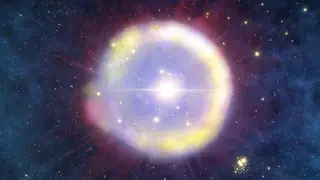
Astrophysicists propose that dense star clusters in the early universe could have produced massive stars through repeated stellar collisions, which later collapsed into intermediate- or supermassive black holes. The model, based on high-resolution simulations, shows that in regions with extreme density, stars merge repeatedly to form objects exceeding 100,000 solar masses. These processes may also explain the origin of mysterious compact red sources observed in early galaxies.
Astrophysicists led by UCLA doctoral student Claire Williams have proposed a new model explaining how extremely dense star clusters in the early universe—specifically proto-globular and nuclear star clusters at high redshift—could have generated very massive stars through repeated stellar collisions. Their simulations, based on cosmological data from high-resolution models and validated via Monte Carlo methods, show that in regions exceeding 100,000 solar masses per cubic parsec, stars merge repeatedly to form objects surpassing 100,000 times the mass of the Sun. These massive stellar remnants may have collapsed into intermediate- or supermassive black holes, offering a potential origin for mysterious compact red sources—known as little red dots (LRDs)—observed in early galaxies by the James Webb Space Telescope. The team’s work connects previously disparate observations: the formation of massive stars, the evolution of dense clusters, and the enigmatic nature of LRDs, suggesting that these objects may be gaseous environments around black holes formed from such collisions. When a massive black hole is already present, dynamical friction accelerates stars in the core, leading to destructive collisions that eject material and create dense gas clouds matching LRD characteristics.
The research builds on prior studies of Population III stars and early galaxy formation, where direct observation remains limited due to distance and redshift. The team’s analytic model differs from ob
This research could reshape how astronomers interpret early galaxy formation, particularly the origin of enigmatic compact sources like little red dots that have puzzled scientists since their discovery in James Webb data. If confirmed, the model suggests that some of the earliest massive black holes may not have formed from single massive stars but through dynamic stellar collisions—offering a more plausible path to supermassive seeds in the young universe. This shift may influence how space agencies prioritize telescope time and mission design, favoring deeper surveys of high-redshift regions. The findings also highlight the value of combining theoretical modeling with observational data, potentially encouraging more interdisciplinary collaboration between astrophysicists and computational scientists. A comparable precedent is the 2015 detection of gravitational waves from black hole mergers, which validated long-standing theoretical predictions and spurred new observational campaign