Pete Ricketts Wins Re-Election to U.S. Senate in Nebraska Amid Competitive Race
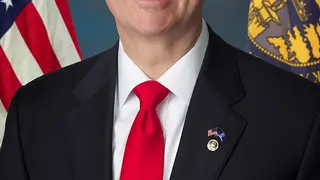
Incumbent Senator Pete Ricketts (R) successfully retained his seat in Nebraska, defeating independent candidate Dan Osborn and three other contenders in a closely watched general election. The race gained attention after Democratic primary winner Cindy Burbank withdrew, citing unfavorable odds. Ricketts, a former governor with deep ties to conservative politics, emphasized his record on tax cuts and government efficiency.
In the Nov. 3, 2026, general election, incumbent Republican Senator Pete Ricketts defeated independent candidate Dan Osborn and three other contenders to retain Nebraska’s U.S. Senate seat. Ricketts secured 62.6% of the vote, a margin that reflected strong support despite Osborn’s notable campaign. The race gained national attention after Democratic primary winner Cindy Burbank withdrew on July 17, 2026, citing unfavorable odds and stating she would not be the next senator. This withdrawal left Osborn as the primary Democratic-endorsed alternative, though he ran as an independent, vowing to remain unaffiliated with either party. Ricketts, a former governor of Nebraska (2015–2023) and a member of a wealthy political family, emphasized his record on tax cuts and government efficiency, while Osborn, a former industrial mechanic and union leader with military service, leveraged his blue-collar background to appeal across party lines. Ricketts raised $14.5 million and spent $13.8 million, while Osborn raised $11 million and spent $9.1 million. The Cook Political Report and other analysts had rated the race as Lean or Likely Republican, reflecting the broader conservative tilt in Nebraska, where Trump won 59.3% in 2024—though Ricketts outperformed Trump in that year’s Senate race. The outcome solidifies Republican control of the seat, but the strength of Osborn’s independent campaign raises questions about the viability of nonpartisan candidates in statewide races.
Ricketts’ re-election reinforces the Republican Party’s dominance in Nebraska’s federal politics, potentially influencing the balance of power in the Senate, especially as the party seeks to maintain its majority. Osborn’s strong showing as an independent—despite losing by over 25 percentage points—suggests a growing appetite among voters for candidates outside traditional party structures, particularly those emphasizing economic populism and government accountability. This could signal a shift in voter behavior in reliably conservative states, where independent or third-party candidates may gain traction by appealing to disaffected moderates or working-class voters. Comparable to Bernie Sanders’ 2016 presidential campaign, which mobilized grassroots support beyond party lines, Osborn’s campaign may inspire similar movements in future elections. However, it remains uncertain whether this model can scale beyond Nebraska or if it will remain a niche phenomenon. What to watch for next is whether other states see similar independent challenges in Senate races, especially in states with strong Republican leanings but pockets of voter discontent. The long-term impact on party cohesion and primary competitiveness may depend on whether candidates like Osborn can sustain momentum beyond a single election cycle.