SpaceX Aims for Historic Dual Catch of Starship Stages in Upcoming Orbital Test Flight
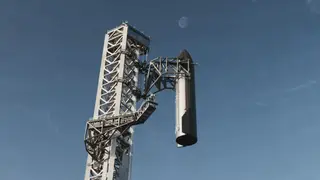
SpaceX plans to attempt the first-ever recovery of both Starship stages during Flight 15, scheduled for November 13, 2026. The mission will involve launching the V3 iteration of Starship and attempting to catch both the Super Heavy booster and the upper stage at the launch site. If successful, it would mark a major milestone in reusable orbital rocket technology.
SpaceX’s Flight 15, scheduled for November 13, 2026, from Starbase, Texas, marks a pivotal moment in spaceflight history by aiming to recover both stages of its Starship system—Super Heavy booster and the upper stage, Ship 42—at the launch site. This will be the first orbital test flight since Flight 14 (September 28, 2026), which ended prematurely due to engine failures during reentry and boostback burns. Flight 15 is designed to last approximately 22 hours, with Ship 42 reaching an apogee of about 170 miles (275 km) and completing 14 orbits before returning. The mission includes deploying 26 Starlink V3 satellites, three equipped with cameras to monitor the heatshield during reentry. The recovery plan involves a complex sequence: Ship 42 will perform a bellyflop maneuver upon descent, flip vertically using three Raptor engines, and be caught mid-air by the launch tower’s “chopstick” arms. This process relies on pre-validated systems from prior flights, with flight controllers authorized to abort or redirect to one of five contingency splashdown zones in the Indian Ocean, Pacific Ocean near Hawaii and Chile, or the Gulf of America if anomalies arise. The FAA has approved return-to-launch-site conditions, and SpaceX will only permit reentry if vehicle health meets strict internal and regulatory standards.
The background for this milestone lies in SpaceX’s long-term vision to create a fully reusable orbital launch system, reducing costs and enabling rapid turnaround. Previous attempts have focused on partial recoveries—such as Super Heavy’s splashdown or upper stage testing—but never both stages at once. The V3 iteration of Starship represents a significant upgrade over earlier versions, with enhanced thermal protection and control systems. SpaceX’s goal is to begin reflights of the upper stage by 2027 if this mission succeeds. The broader context includes competition from Blue Origin’s New Glenn, whose return flight has been delayed to January 2027, and NASA’s Artemis program, which recently caused temporary atmospheric disturbances during a test flight. What remains unresolved is whether the catch mechanism can withstand the dynamic forces of reentry and vertical descent under real-world conditions. The outcome could determine the pace of deep-space missions, including Mars colonization efforts.
If successful, Flight 15 could redefine the economics of orbital access by demonstrating full system reusability—a capability that could lower launch costs dramatically and accelerate deployment of satellite constellations like Starlink. This would benefit global internet connectivity, especially in remote regions, while also strengthening SpaceX’s dominance in the commercial launch market. The technology may influence how other aerospace firms approach reusable vehicle design, potentially pushing competitors to adopt similar catch or recovery strategies. A comparable precedent is the Space Shuttle program, which achieved partial reusability but at high maintenance and operational cost; Starship’s goal of rapid, low-cost reuse could represent a generational leap. However, if the catch fails, it may delay broader adoption of full reusability and reinforce skepticism about the feasibility of such ambitious recovery methods. The public and regulatory bodies will be watching closely for safety outcomes, especially given the flight path over populated areas in Texas and northern Mexico. What to watch for next is not just technical success but how quickly SpaceX can iterate on data from this mission—potentially enabling a new era of frequent, affordable spaceflight that could reshape satellite deployment, scientific missions, and even future crewed exploration.