OnePlus Unveils Major Software Shift with ColorOS 17, Featuring AI Enhancements and Smoother Performance
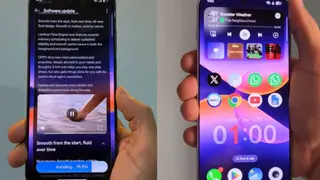
OnePlus has transitioned from OxygenOS 16 to the new ColorOS 17, introducing a redesigned interface with translucent elements, improved animations, and enhanced system performance through new Laminar Flow and Luminous Rendering engines. The update emphasizes AI-driven features for productivity, real-time translation, and better information management. It marks a significant software evolution for OnePlus devices running on Android 17.
OnePlus has officially transitioned from OxygenOS 16 to ColorOS 17, marking a significant software shift for its devices running on Android 17. The update, announced on November 8, 2026, introduces a redesigned interface featuring translucent elements, soft lighting effects, and glowing music playback bars inspired by Apple iOS 27. Key performance upgrades include the Laminar Flow Engine, which accelerates app launches by up to 25% and improves gallery photo loading by 55%, and the Luminous Rendering Engine, which reduces RAM usage by 25% and maintains 90% of initial smoothness even after prolonged use. The new Control Center offers customizable settings and split-mode functionality, while a dynamic Flux theme adapts to real-time weather conditions. AI features such as AI Mind Pilot, AI Mind Space, AI Mind Suggest, and AI Live Interpreter are now integrated, enabling on-device task management, memory recall, daily planning, and real-time translation. These updates are rolling out to eligible OnePlus phones in November 2026, with a full list of supported devices published by the company.
This shift follows OnePlus’s broader strategic alignment with Oppo, its parent company, which has long used ColorOS across its product line. The move signals a departure from OxygenOS’s minimalist, near-stock Android identity and reflects a growing emphasis on AI-driven personalization and visual polish. While OxygenOS users may miss the familiar interface, the new features aim to enhance productivity and user engagement through intelligent automation. OnePlus executives, including CEO Proximity (Hardik Jagda), are positioning this update as a competitive response to iOS 27 and rival Android ecosystems like Xiaomi’s HyperOS 4. However, it remains unclear how deeply these AI tools will be integrated across all devices or whether older models will receive full functionality. The long-term impact on user retention and ecosystem loyalty is still uncertain.
The rollout of ColorOS 17 could reshape user expectations for smartphone software, particularly in the mid-to-high-end market where personalization and performance are key differentiators. By integrating AI features like real-time translation and predictive task management, OnePlus may strengthen its appeal to professionals and multitaskers who value efficiency. The emphasis on visual fluidity—translucent layers, adaptive themes—suggests a broader industry trend toward immersive, emotionally resonant interfaces, similar to Apple’s evolution from iOS 10 to iOS 17. However, the success of this shift depends on whether users perceive these enhancements as meaningful improvements or just aesthetic changes. If AI features prove reliable and privacy-preserving, they may set a new benchmark for Android customization. Conversely, if performance gains are uneven across devices or AI tools feel intrusive, user backlash could follow. The broader market may respond by accelerating similar integrations, especially from rivals like Xiaomi and Realme. What remains to be seen is whether this software pivot strengthens OnePlus’s position against Apple and Samsung—or if it risks alienating users loyal to the original OxygenOS experience.