Supreme Court Sides with Trump Administration in Big Bend Border Wall Dispute
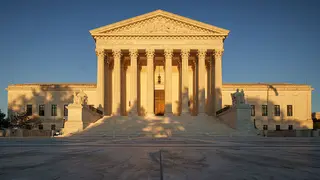
The Supreme Court permitted the Trump administration to resume building a border wall in Texas's Big Bend region, overturning a lower court’s temporary halt. The decision came after the Department of Homeland Security invoked waivers under the 1996 Illegal Immigration Reform and Immigrant Responsibility Act to bypass environmental laws. A federal judge had ruled the waivers likely unlawful, citing insufficient evidence that the area has high illegal crossings.
The U.S. Supreme Court on Monday allowed the Trump administration to resume construction of a border wall in Texas’s Big Bend region, overturning a temporary halt imposed by U.S. District Judge Kathleen Cardone on October 2. The decision followed the Department of Homeland Security’s (DHS) invocation of waivers under the 1996 Illegal Immigration Reform and Immigrant Responsibility Act (IIRIRA), which permits the DHS secretary to bypass environmental and conservation laws for border infrastructure. The waivers were issued by then-Secretary Kristi Noem and her successor Markwayne Mullin, who claimed the Big Bend area was a high-priority zone for illegal crossings. However, Cardone ruled that the area accounted for only 0.3% to 2.2% of apprehensions despite comprising over 25% of the U.S.-Mexico border, suggesting the waivers were unjustified under the major questions doctrine—a legal principle requiring clear congressional authorization for sweeping regulatory actions. The plaintiffs challenging the project included an environmental group, a local river guide, and a preservation group focused on a historic church, all concerned about ecological damage to Big Bend National Park and surrounding lands. The Supreme Court’s unsigned opinion did not resolve the underlying legality of the waivers but granted a stay, allowing construction to proceed while the case moves forward. Justice Ketanji Brown Jackson was the sole justice to dissent from the stay, though she offered no explanation. It remains unclear whether the Court will grant full review or how long the legal battle over the major questions doctrine will last.
The Supreme Court’s decision to allow construction to resume in Big Bend could deepen tensions between federal immigration enforcement and environmental protection efforts, particularly in ecologically sensitive areas. The ruling may embolden future administrations to rely more heavily on IIRIRA waivers, potentially setting a precedent that weakens the role of federal courts in reviewing executive power over land use and environmental law. If upheld, such an interpretation could diminish the effectiveness of environmental statutes like the National Environmental Policy Act (NEPA) when applied to border security projects. The case echoes earlier disputes, such as those involving the Obama administration’s use of waivers during the 2010s, but stands out for its focus on the major questions doctrine and the judiciary’s role in assessing statutory clarity. This decision may also influence how state and local governments respond to federal infrastructure mandates, especially in protected or culturally significant regions. What remains uncertain is whether Congress will act to clarify or limit the scope of waiver authority—something that could prevent future legal challenges. The outcome may shape public trust in federal environmental governance and affect long-term conservation planning across borderlands.