SpaceX Rolls Starship's Super Heavy Booster to Launch Pad for Flight 15
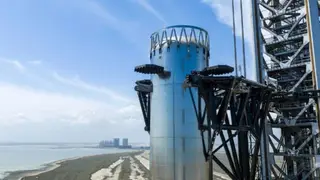
SpaceX has moved Booster 22, a 233-foot Super Heavy V3 rocket, from its assembly building at Starbase in Texas to Pad 2 ahead of the November 13, 2026 launch of Starship Flight 15. The booster recently completed a static fire test of its 33 Raptor engines and is set to power Ship 42 into an orbit approximately 170 miles high. This mission aims to achieve the first catch landing of both the Super Heavy booster and the Starship upper stage, marking a milestone in reusable rocket technology.
On November 10, 2026, SpaceX rolled Booster 22—a 233-foot Super Heavy V3 rocket—from Megabay 1 to Pad 2 at its Starbase facility in Texas, marking a critical step toward the launch of Starship Flight 15 scheduled for November 13. The booster, equipped with 33 Raptor engines, successfully completed a static fire test prior to rollout and is set to propel Ship 42 into a low Earth orbit approximately 170 miles above the planet. This mission represents a pivotal milestone: it aims to achieve the first-ever catch landing of both the Super Heavy booster and the Starship upper stage at the launch site, a feat that would validate full reusability for the entire system. Previous flights used ocean splashdowns to minimize risk to infrastructure, but Flight 15 marks a shift toward controlled recovery using ground-based capture mechanisms. Elon Musk has previously estimated a 50–60% chance of catching the upper stage, with the simultaneous catch of the booster now also being attempted. The flight will include 26 Starlink V3 satellite deployments and feature real-time imaging from three Starlink satellites equipped with HD cameras to monitor the heat shield during re-entry. Ship 40, which survived Flight 13’s splashdown, has been returned to Megabay 2 for potential refurbishment, signaling SpaceX’s push toward rapid reuse. The company is also expanding infrastructure at Kennedy Space Center and Cape Canaveral, seeking FAA approval for up to 450 launches annually from Texas and developing Starbase Louisiana for future high-frequency operations.
If successful, Flight 15 could significantly accelerate the commercialization of space by demonstrating a fully reusable launch system, potentially slashing launch costs and increasing flight cadence. This would benefit satellite operators, scientific missions, and deep-space exploration programs reliant on affordable access to orbit. The ability to catch both stages at the pad may enable turnaround times akin to commercial aircraft, transforming how frequently rockets are reused—a model Musk has long championed. Comparable to the early days of reusable Falcon 9 development, this phase could mark a tipping point in public and private investment in space infrastructure. However, risks remain: the complexity of synchronized precision landings under high stress is unproven at scale. Success may prompt regulatory bodies like the FAA to fast-track approvals for frequent launches, while competitors such as Blue Origin or Rocket Lab might accelerate their own reusable programs. The broader impact could extend to international space agencies, which may rely more heavily on Starship for lunar and Mars missions—especially with Artemis III’s planned docking test in 2027. What remains uncertain is whether the catch landing will be attempted if anomalies arise during ascent, or how quickly SpaceX can scale operations post-Flight 15.