ULA Attributes Vulcan Rocket Failure to Insufficient Fuel Supply to BE-4 Engines
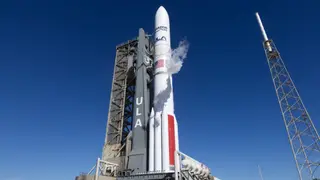
The United Launch Alliance (ULA) has determined that the November 15 failure of its Vulcan rocket (VC6L) was caused by an inadequate fuel supply to the BE-4 engines on the core stage, despite the engines performing as expected. The anomaly occurred shortly after liftoff, resulting in insufficient thrust to reach orbit and preventing the deployment of 40 Amazon Leo broadband satellites. The second stage, Centaur, functioned nominally but could not compensate for the first stage's underperformance.
On November 15, 2026, the United Launch Alliance (ULA) launched its Vulcan rocket (VC6L) from Cape Canaveral in Florida, marking the first mission for Amazon’s Leo broadband satellite constellation. The launch failed shortly after liftoff when the core stage’s two BE-4 engines, supplied by Blue Origin, did not receive sufficient fuel, resulting in inadequate thrust to reach orbit. Despite the engines performing as expected, telemetry was lost 10 minutes into the flight, and the second stage (Centaur)—which functioned nominally—could not compensate for the underperformance. The mission was intended to deploy 40 Leo satellites into low Earth orbit, but the failure left them stranded in a suborbital trajectory. The six solid rocket boosters, which had previously caused issues in October 2024 and February 2026, were reported to have performed reliably this time, suggesting the fault lay in the core stage’s fuel delivery system. ULA has grounded the Vulcan fleet pending a full investigation with support from the Federal Aviation Administration (FAA). The VC6L rocket, standing 215 feet tall, is designed to carry up to 60,000 pounds to low Earth orbit and is part of a 38-launch contract with Amazon to deploy over 3,000 satellites. Amazon has already launched about 400 satellites across 14 missions using various launch vehicles, including the Atlas V, Falcon 9, and Ariane 6. The next Leo launch is scheduled for November 23, 2026, aboard Ariane 64 from French Guiana. What remains unknown is the precise technical failure in the fuel supply chain—whether it was a valve, pump, or software issue—and how long it will take to resolve.
The failure of the Vulcan VC6L mission could delay Amazon’s ambitious goal of delivering global broadband via its Leo constellation, potentially affecting connectivity plans for underserved regions. As Amazon relies on multiple launch providers—including ULA, SpaceX, and Arianespace—the loss of one vehicle increases pressure on others to maintain schedules, possibly affecting launch pricing and availability. This incident echoes the 2015 failure of the first Falcon 9 flight with a Dragon capsule, which temporarily disrupted SpaceX’s timeline but ultimately led to improved reliability. The current situation may prompt Amazon to reassess its launch strategy, possibly accelerating diversification or increasing reliance on proven platforms like Falcon 9. For ULA, the setback threatens its position as a key player in national security and commercial launches, especially as it competes with SpaceX’s lower-cost, high-frequency model. The FAA’s involvement signals regulatory scrutiny, which could extend timelines. What may follow is a more cautious approach to launch scheduling, increased transparency from ULA, and heightened investor interest in launch reliability. The broader space industry may see a ripple effect in launch contracts and insurance costs, particularly for missions involving new or unproven systems.