Bulgaria Observes National Mourning After Trakia Motorway Crash Kills 12 and Injures 51
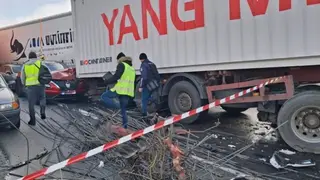
Bulgaria declared a national day of mourning on November 11 after a chain-reaction crash on the Trakia motorway killed at least 12 people and injured 51. The accident, involving around 86 vehicles, was triggered when a grain truck blocked a passenger bus, worsened by dense fog. Prime Minister Rumen Radev canceled parliamentary sessions and European Commission President Ursula von der Leyen postponed her talks in Bulgaria to attend the site, highlighting the severity of the incident.
On November 10, 2026, a catastrophic chain-reaction crash on Bulgaria’s Trakia motorway near Yambol killed at least 12 people and injured 51, involving approximately 86 vehicles in dense fog. The incident began when a grain truck obstructed the path of a passenger bus, triggering a multi-vehicle pile-up that paralyzed both directions of the highway. Prime Minister Rumen Radev declared November 11 a national day of mourning, calling it “a dark day for the whole of Bulgaria,” and canceled parliamentary sessions to allow focus on the tragedy. European Commission President Ursula von der Leyen, who was scheduled to hold talks in Varna with Radev on Black Sea security, postponed her visit to attend the crash site, underscoring the incident’s national significance. Emergency services worked through the day to rescue victims, many of whom were transported to hospitals in Yambol, Sliven, and Burgas; calls for blood donations spread rapidly across social media platforms. The accident has reignited long-standing concerns about road safety in Bulgaria, where 6,665 serious traffic incidents occurred in 2025 alone—resulting in 465 fatalities and 8,295 injuries—highlighting systemic shortcomings despite prior warnings. President Iliana Iotova also cut short her participation in the Paris Peace Forum to return home, reflecting the gravity of the moment. What remains unresolved is whether regulatory or infrastructural changes will follow, especially regarding fog-related visibility protocols, truck safety standards, and emergency response coordination on major highways.
The Trakia motorway crash could deepen public scrutiny of Bulgaria’s transportation infrastructure and crisis management systems, particularly in rural and high-traffic corridors. With over 460 deaths from road accidents in a single year, the tragedy may prompt renewed calls for investment in real-time weather monitoring, improved signage, and stricter vehicle safety regulations—especially for freight transport. The incident may also influence regional policy, as von der Leyen’s delayed Black Sea security talks could shift focus toward infrastructure resilience as part of broader security planning. Comparable to the 2016 M6 motorway pile-up in the UK that led to national safety reviews, this event may catalyze legislative or technical reforms, though outcomes remain uncertain. The emotional toll on families and first responders is likely to persist, with potential long-term psychological impacts. Moving forward, observers should watch for whether the government establishes a formal inquiry, allocates emergency funds for road upgrades, or implements mandatory driver training updates—especially in low-visibility conditions.