Ukraine’s Foreign Minister Demands Europe Cut Off Russia’s War Funding
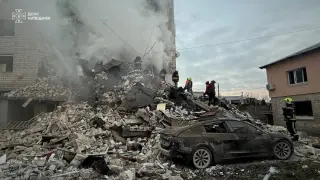
Ukraine’s Foreign Minister Andrii Sybiha has called on European allies to stop treating Russian attacks in isolation and instead cut off the resources enabling Moscow’s war effort. The appeal follows a deadly overnight drone strike on a residential building in Dymer, Kyiv region, which killed at least two people, injured four, and left others missing. Sybiha held President Vladimir Putin fully responsible for civilian casualties and war crimes.
On November 22, 2026, a Russian drone strike devastated a residential apartment building in Dymer, a settlement within the Kyiv region’s Vyshhorod district, killing at least two civilians, injuring four, and leaving 14 others unaccounted for beneath the rubble. The attack partially destroyed floors one through five of the building, damaging a nearby kindergarten and local shop. Rescue operations were ongoing, with the State Emergency Service and other teams working to recover survivors and victims. This strike was part of a broader escalation: over the previous week, Russian forces launched approximately 2,700 strike drones, nearly 1,460 guided aerial bombs, and 165 missiles—including upgraded North Korean ballistic missiles—across 20 Ukrainian regions. President Volodymyr Zelensky reported these figures and reiterated his urgent appeal for the U.S. to authorize the transfer of Patriot air defense systems already funded through NATO’s Prioritized Ukraine Requirements List (PURL). Foreign Minister Andrii Sybiha condemned the attack, attributing full responsibility to Russian President Vladimir Putin, and warned that such strikes are not isolated incidents but part of a coordinated strategy to destabilize Europe. He emphasized that European nations must stop treating each attack as a separate event and instead target the root source: Russia’s war economy. Sybiha called for Europe to cut off the financial, logistical, and technological resources enabling Moscow’s aggression, framing this as essential to continental security.
The broader context includes a series of recent Russian provocations beyond Ukraine’s borders. On November 20, two Russian cruise missiles and a jet-powered drone violated southeastern Polish airspace during an attack on western Ukraine, crashing near the Nowa Dęba military training grounds. This prompted NATO Secretary-General Mark Rutte to visit Warsaw ahead of an emergency North Atlantic Council meeting in Brussels on November 23. Simultaneously, Moldova reported two separate violations of its airspace by jet-powered drones on November 21, following a prior nine-minute breach and earlier sightings of a Geran-2 drone over Chișinău. These incidents underscore a growing pattern of hybrid warfare and cross-border aggression. The European Union and NATO remain divided on how to respond, with some nations hesitant to escalate tensions. What remains unresolved is whether European leaders will move beyond reactive measures to implement coordinated economic and technological sanctions aimed at cutting off Russia’s war funding. The next critical step may be a unified European strategy to restrict exports of dual-use technologies and financial flows that indirectly support Russia’s military capabilities.
The Dymer strike and Sybiha’s appeal could intensify pressure on European governments to move from symbolic support to concrete actions that disrupt Russia’s war economy. Civilian casualties in Kyiv and repeated cross-border incidents may heighten public anxiety across Europe, particularly in border states like Poland and Moldova, where fear of direct escalation is rising. If European leaders fail to act decisively, it could erode trust in NATO’s collective defense framework and fuel domestic political movements calling for greater national defense spending or even neutrality. The situation may also influence financial markets, particularly in energy and defense sectors, as investors reassess risk exposure to countries with ties to Russia. A comparable precedent is the 2014 annexation of Crimea, when initial international responses were seen as too limited, allowing Russia to consolidate gains. In that case, delayed sanctions and inconsistent enforcement emboldened further aggression. Today, the risk is similar: if Europe continues to respond to attacks in isolation, it may reinforce the perception that Russia can escalate with impunity. What could follow is a shift toward more coordinated sanctions targeting Russian state-owned enterprises, financial institutions, and energy exports—though such moves may face resistance due to economic interdependence. Monitoring the upcoming NATO meeting and EU policy shifts will be key indicators of whether this moment marks a turning point or another missed opportunity.