Oldest Known Compact Quasar Pair Found, Challenging Black Hole Formation Theories
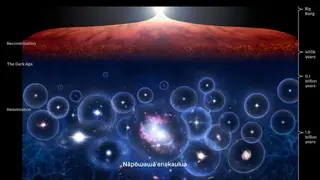
Astronomers have discovered Nāpōwawāʻenakaulua, the oldest known pair of quasars, located just 18,100 light-years apart and existing only 900 million years after the Big Bang. The two supermassive black holes, with masses of 1.5 billion and 400 million solar masses respectively, challenge current models of how such massive objects could form so early in cosmic history. Detected using data from the James Webb Space Telescope and confirmed with Gemini North observations, this rare system may signal a period of intense matter density that fueled both rapid black hole growth and star formation in the early Universe.
Astronomers have identified Nāpōwawāʻenakaulua—also designated J1602+4228AB—as the oldest known pair of quasars, located just 18,100 light-years apart and existing only 900 million years after the Big Bang. The system comprises two supermassive black holes with masses of 1.5 billion and 400 million solar masses, respectively, making their presence at such an early cosmic epoch highly unusual. Detected through data from the James Webb Space Telescope’s Near-Infrared Spectrograph Integral Field Unit, the pair was confirmed via follow-up observations using the Gemini North telescope’s GNIRS and GMOS instruments. This discovery marks only the third known quasar pair observed during the era of cosmic dawn, when the first galaxies and stars were just forming. The extreme mass of these black holes so soon after the Big Bang challenges prevailing theories about how such massive objects could form in such a short time, especially given that current models struggle to explain even one supermassive black hole of this scale at this early stage.
The research team, led by Dr. Silvia Onorato from NSF’s NOIRLab, emphasizes that there is no definitive theoretical explanation for how either quasar formed so early, let alone a pair in such close proximity. The system may represent a rare window into a period of exceptionally high matter density in the early Universe, where intense galactic interactions could have simultaneously fueled rapid star formation and black hole growth. This environment offers a unique laboratory for studying the co-evolution of massive galaxies and their central black holes during the formative era of cosmic structure. The findings, published in Astrophysical Journal Letters, suggest that current models of black hole and galaxy formation may need revision to account for such early, large-scale phenomena. What remains unresolved is whether such systems were more common than believed or if they represent rare anomalies—future observations will be needed to determine their frequency and implications.
The discovery of Nāpōwawāʻenakaulua could influence how we understand the timeline of cosmic evolution, particularly the formation of supermassive black holes. If such massive objects formed earlier and more rapidly than models predict, it may prompt a reevaluation of cosmological simulations and the role of dark matter or primordial density fluctuations in early structure formation. This has implications for both theoretical astrophysics and observational planning, potentially increasing demand for deep-sky surveys using next-generation telescopes like the upcoming LUVOIR or Habitable Worlds Observatory. The public may also experience a renewed fascination with space exploration, as such findings underscore how much remains unknown about the origins of the Universe. Comparable to the 2018 discovery of a massive quasar at redshift z ≈ 7, which similarly challenged formation timelines, this finding could shift scientific consensus over time. Institutions like NASA, ESA, and the NSF may prioritize funding for high-resolution infrared surveys and multi-wavelength follow-ups to identify similar systems. The broader impact lies in how such discoveries reinforce the value of long-term investment in space science infrastructure. What to watch for next is whether additional quasar pairs are found at comparable redshifts—this could confirm a previously underappreciated phase of intense cosmic activity or reveal that current models require fundamental adjustments.