James Webb Telescope Observes Outflows Quenching Star Formation During Cosmic Noon
NASA’s James Webb Space Telescope has revealed that massive gaseous outflows from supermassive black holes in the centers of galaxies played a key role in quenching star formation during 'Cosmic Noon'—8 to 12 billion years ago, when star formation peaked in the universe. These outflows, driven by accretion onto black holes, eject cold, star-forming gas from galaxies, halting new star birth. The findings suggest that galactic outflows are a dominant force in regulating galaxy evolution over cosmic time.
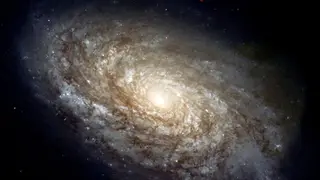
NASA’s James Webb Space Telescope has captured definitive evidence that powerful gaseous outflows from supermassive black holes in massive galaxies played a central role in halting star formation during Cosmic Noon—approximately 8 to 12 billion years ago, when star birth in the universe reached its peak. These outflows, driven by accretion onto black holes, eject cold, star-forming gas from galaxies, effectively quenching new star birth. The findings, detailed in a new paper published in Astrophysics and Space Science, are based on observations of galaxies like NGC 4414, a spiral galaxy located about 60 million light-years away in the constellation Coma Berenices. The research, led by astrophysicist Rebecca Davies of Swinburne University of Technology and co-authored by Sirio Belli of the University of Bologna, reveals that these outflows are more widespread and energetic than previously believed, suggesting they are a dominant force in shaping galaxy evolution. Prior to Webb, such processes were inferred from indirect data, but the telescope’s infrared capabilities now allow direct measurement of cold gas being expelled. The team posits that while outflows are common during Cosmic Noon, only the most powerful ones lead to full quenching, possibly triggered by galaxy mergers or radio jets from black holes. What remains unclear is why some galaxies with strong outflows do not quench, and what exact conditions lead to the transition from equilibrium to shutdown.
The discovery could reshape how we understand the cosmic timeline of star and planet formation, with implications for astrobiology and the search for habitable worlds. If star formation was shut down in the Milky Way during Cosmic Noon, as the researchers suggest, our solar system—only 5 billion years old—might never have formed, highlighting how galactic-scale processes can influence planetary habitability. This insight may affect future exoplanet mission planning, as it underscores that habitable systems are not guaranteed in all galaxies. The findings also reinforce the growing consensus that supermassive black holes are not passive features but active regulators of galactic evolution, potentially influencing long-term stability and diversity of planetary systems. A comparable earlier case is the discovery of dark energy, which similarly shifted cosmological models by revealing an unseen force shaping the universe’s expansion. The next phase may involve using JWST data to model how quenching affects molecular cloud formation and the distribution of elements necessary for life. Scientists may also explore whether quenched galaxies, once dormant, could reactivate under certain conditions, a question that could influence how we interpret galactic evolution over billions of years.