Supreme Court Justice Alito Criticizes Lower Court Rulings Blocking Trump’s Policies
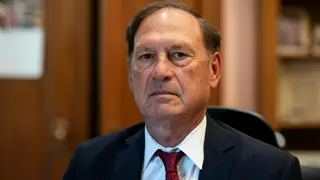
Justice Samuel Alito accused lower court judges of abusing their power by blocking President Trump’s policies, including efforts to limit mail-in voting and end birthright citizenship. He made the remarks at a Federalist Society panel, stating that while judges are skilled, they sometimes make serious errors. Alito also warned that a Democratic Congress could defund or shut down the Supreme Court, a claim widely seen as hyperbolic.
On November 13, 2026, Supreme Court Justice Samuel Alito delivered remarks at a Federalist Society panel criticizing lower court rulings that had blocked several policies enacted under President Donald Trump. Alito specifically referenced decisions that halted efforts to restrict mail-in voting and end birthright citizenship, though he did not name individual judges or specific cases. He argued that while lower court judges are “dedicated and skillful,” they occasionally make “serious errors” and have, in some instances, engaged in an “abuse of their powers.” The comments come amid heightened political tensions over judicial independence and the role of courts in checking executive authority. Alito also raised concerns about potential future actions by a Democratic Congress, warning it could defund or shut down the Supreme Court—a claim widely interpreted as hyperbolic and not grounded in current legislative capacity. No specific timeline or mechanism for such a move was offered. The broader context includes prior judicial pushback against Trump-era executive actions, with lower courts frequently intervening on constitutional grounds. Alito’s remarks reflect a growing conservative concern about judicial overreach, particularly when rulings oppose high-profile presidential initiatives. The Federalist Society, known for promoting originalist and textualist interpretations of the Constitution, provided a platform for this critique. What remains unresolved is whether such public criticism from a sitting justice will influence future judicial appointments or further polarize perceptions of the judiciary’s impartiality.
Alito’s remarks could amplify existing political divisions over the independence and legitimacy of federal courts, particularly in cases involving contested executive actions. By framing lower court decisions as abuses of power, Alito may embolden conservative lawmakers to challenge judicial oversight more aggressively, potentially undermining public trust in the judiciary. The warning about a Democratic Congress defunding the Supreme Court, while likely intended as rhetorical, could fuel fears among legal professionals and civil rights advocates about political interference in the nation’s highest court. Historically, similar rhetoric during the 1930s New Deal era saw President Franklin D. Roosevelt propose expanding the Court to counter judicial opposition—though that effort ultimately failed. Today, such a scenario remains unlikely due to constitutional safeguards, but the symbolic weight of Alito’s comments may still affect how courts are perceived in political discourse. What to watch for next is whether other justices or legal institutions respond publicly, and whether lower court rulings on Trump-era policies continue to face increased scrutiny or legislative pushback. The long-term impact could be a further erosion of institutional boundaries between branches of government.