Guterres Urges Civil Society to Counter Fossil Fuel Lobby at COP31
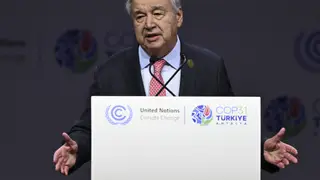
Outgoing U.N. Secretary General António Guterres delivered his final major speech at COP31 in Antalya, Turkey, calling on climate activists and environmental justice advocates to maintain pressure against powerful fossil fuel interests. He emphasized that civil society must provide counter-pressure to ensure governments take decisive action on emissions. Despite global warming continuing unchecked, he urged continued hope and mobilization.
At COP31 in Antalya, Turkey, outgoing UN Secretary-General António Guterres delivered his final major address to civil society representatives, urging sustained pressure on fossil fuel interests despite stalled global progress on emissions reduction. Speaking on November 13, 2026, Guterres emphasized that while governments have failed to act decisively, civil society must serve as a counterweight to powerful lobbies, particularly from nations like Russia and Saudi Arabia with long histories of obstructing climate action. The conference, formally known as the 31st Conference of the Parties, has again avoided concrete commitments on phasing out fossil fuels, even as voluntary pledges to expand electrification remain contentious—especially over whether “clean electrification” should be explicitly defined to exclude fossil-based power. With decisions requiring consensus, observers report that several countries are attempting to block a final agreement document, risking a perception of failure despite the procedural flexibility. Guterres, whose decade-long tenure included repeated warnings about climate inaction, drew on his experience during Portugal’s 1974 Carnation Revolution to affirm faith in collective action. He called for clear timelines and support mechanisms for workers and communities affected by the energy transition. Environmental advocates like Shamini Selvaratnam of the Ocean Conservancy praised Guterres’ leadership, noting his unwavering commitment to climate justice even as he prepares to leave office.
Guterres’s final speech at COP31 may amplify momentum among civil society groups pushing for systemic change, particularly in regions where grassroots movements have struggled against entrenched energy interests. His call to maintain counter-pressure could strengthen alliances between environmental organizations, labor unions, and climate-vulnerable communities, potentially influencing national policy debates in the coming years. The unresolved tension over defining “clean electrification” reflects a broader global struggle: how to transition energy systems without repeating past injustices or enabling greenwashing by fossil fuel companies. A comparable earlier moment was the 2015 Paris Agreement, where civil society played a pivotal role in shaping ambition despite weak enforcement mechanisms. However, unlike then, current momentum appears weaker, with major emitters resisting binding commitments. The outcome of COP31—whether it produces a consensus document or not—could shape perceptions of the UN process’s legitimacy, affecting future diplomatic engagement. What may follow is increased pressure on national governments to deliver on promises independently, especially in countries where civil society remains active and organized. Watch for whether Guterres’s successor will continue his emphasis on people-powered change, and how energy transition plans are framed in upcoming national climate strategies.