AI-Powered Solar Forecasting Advances Accuracy and Grid Integration in 2027
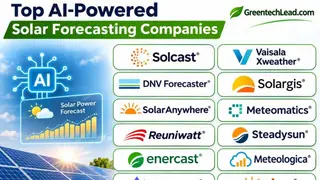
In 2027, solar forecasting providers including Solcast, DNV Forecaster, and Vaisala Xweather are leveraging satellite data, machine learning, and probabilistic models to improve generation predictions and reduce electricity imbalance costs. Solcast reported a historical day-ahead forecast error of 5.9%, outperforming traditional methods, while Vaisala focuses on real-time weather intelligence for grid operators. These tools help developers and utilities optimize battery storage scheduling and trading strategies across distributed solar assets.
In 2027, AI-powered solar forecasting has reached a pivotal point in grid integration and energy market efficiency, with providers like Solcast, DNV Forecaster, and Vaisala Xweather leading the charge. Solcast, now part of DNV after its 2023 acquisition, reported a historical day-ahead forecast error of 5.9% across 33 solar sites from April 2020 to March 2021—significantly lower than traditional methods such as the Global Forecast System (7.7%) and smart persistence (13.2%). This accuracy stems from combining satellite data, machine learning, and photovoltaic simulations delivered via scalable APIs. Vaisala Xweather focuses on real-time weather intelligence for grid operators, while DNV Forecaster leverages site-specific models enhanced by physical and statistical techniques. These tools are critical for optimizing battery storage scheduling and reducing electricity imbalance costs in markets with high solar penetration. The broader market includes 12 key players—Solargis, SolarAnywhere, Meteomatics, Reuniwatt, Steadysun, enercast, Meteologica, ENFOR, and Jua—each differentiating through specialized offerings such as probabilistic modeling, cloud-based delivery, or sky-camera monitoring. The shift toward AI-driven forecasting reflects prior investments in renewable infrastructure and digitalization, building on earlier reporting that highlighted the need for better predictability as solar capacity expanded globally. Companies aim to attract developers, utilities, and traders by offering measurable cost reductions and seamless API integration. However, it remains unclear how widely these advanced models are deployed beyond pilot projects or whether regulatory frameworks have evolved to incentivize their adoption.
The improved accuracy of AI-powered solar forecasting could significantly stabilize electricity markets by reducing the financial penalties associated with generation imbalances, particularly in regions with high renewable penetration. Grid operators may benefit from more reliable short-term scheduling, while energy traders could refine their bidding strategies using probabilistic forecasts. This advancement may also accelerate the deployment of battery storage systems, as better forecasts allow for optimized charging and discharging cycles. A comparable earlier case is the integration of wind forecasting in the early 2010s, which similarly reduced grid instability and enabled greater renewable share in electricity mixes. However, unlike wind, solar output is more predictable on a daily cycle, so the impact may be less disruptive but more pervasive across distributed systems. The real-world effectiveness of these tools depends on widespread adoption, data access, and interoperability with existing grid management platforms—factors not yet confirmed at scale. What to watch for next includes whether utilities begin mandating forecast accuracy standards or if regulators introduce incentives tied to reduced imbalance costs. The long-term societal impact may include lower electricity prices and increased grid resilience, though this could be offset by growing dependence on proprietary data systems and potential vendor lock-in.