Leading AI-Driven Platforms Revolutionize Solar Asset Performance in 2027
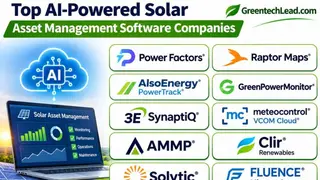
The global solar asset management software market is advancing rapidly in 2027, with companies like Power Factors, Raptor Maps, and Fluence deploying AI, digital twins, and predictive maintenance to enhance energy output and reduce downtime. These platforms integrate real-time monitoring, financial analytics, and automated reporting for utilities, independent power producers, and developers managing large-scale solar portfolios. Key differentiators include AI trained on over 310 GW of renewable assets and capabilities in multi-site optimization and battery storage integration.
In 2027, the global solar asset management software market is being reshaped by AI-driven platforms such as Power Factors, Raptor Maps, Fluence, and others, with Power Factors unveiling Unity REMI in April 2026—AI trained on data from over 310 GW of renewable assets. This platform enables predictive maintenance, real-time monitoring, and automated reporting for utilities, independent power producers, and developers managing large-scale solar portfolios. Raptor Maps leverages drone imagery and digital twins to detect defective modules and support warranty claims, while AlsoEnergy’s PowerTrack integrates solar and battery storage monitoring. DNV-backed GreenPowerMonitor offers Horizon for centralized SCADA and analytics, and 3E’s SynaptiQ uses physics-based modeling to differentiate weather-related from equipment-related performance drops. These advancements follow years of incremental improvements in solar monitoring systems, with earlier platforms focusing on basic data collection rather than intelligent analysis. The shift toward AI and digital twins reflects a broader industry move toward optimizing energy output and reducing downtime, driven by the need to maximize returns on increasingly capital-intensive renewable projects. Companies like Power Factors and Raptor Maps aim to reduce reliance on fragmented tools by offering unified software environments, while others emphasize integration with battery storage systems and multi-site optimization. What remains unresolved is how standard these advanced capabilities will become across smaller developers or emerging markets, where cost and infrastructure limitations may hinder adoption. The long-term success of these platforms may depend on interoperability standards and the ability to scale AI models without compromising data privacy.
These AI-powered solar management tools could significantly improve grid reliability and energy affordability by maximizing output from existing solar assets, particularly in regions with high solar potential but variable weather patterns. Utilities and independent power producers may see reduced operational costs and faster response times to equipment failures, potentially lowering electricity prices over time. The integration of digital twins and predictive analytics may also influence insurance models for renewable projects, as more accurate risk assessments become possible. A comparable earlier case is the adoption of SCADA systems in the 1990s, which transformed power plant monitoring from manual to automated—this shift similarly required new skill sets and infrastructure investments. Today’s AI platforms may follow a similar trajectory, with early adopters gaining competitive advantages while laggards risk inefficiency. However, widespread impact depends on data accessibility, cybersecurity safeguards, and vendor lock-in risks. The next key development to watch is whether open standards will emerge to prevent monopolistic control of asset intelligence, or if proprietary models will dominate, potentially limiting innovation in smaller markets.