Floating Solar Innovators Scale Projects Amid Rising Demand for Reservoir-Based Energy
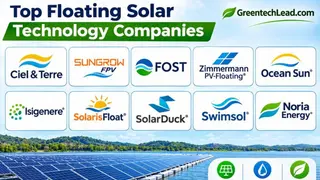
In 2027, floating solar technology providers such as Ciel & Terre, Sungrow FPV, and SolarDuck are expanding global deployment through innovations in modular platforms, anchoring systems, and offshore integration. Ciel & Terre completed a 119.7 MWp project at India’s Omkareshwar reservoir using rock-bolt anchoring for deep waters, while Sungrow FPV delivered a 192 MW installation in Indonesia. These projects highlight advancements in engineering for challenging environments and growing investment in solar-plus-storage floating systems.
In 2027, floating solar technology is advancing rapidly through large-scale deployments across diverse geographies and challenging environments. Ciel & Terre completed a 119.7 MWp project at India’s Omkareshwar reservoir, using rock-bolt anchoring to stabilize its Hydrelio modular platforms in water depths of 25–30 metres—conditions that previously limited solar deployment on deep reservoirs. Simultaneously, Sungrow FPV delivered a 192 MW installation at Indonesia’s Cirata reservoir, overcoming extreme depths near 100 metres through advanced mooring simulations and high-load-bearing floating structures. These projects reflect a broader trend: the global floating solar photovoltaic (FPV) market surpassed 9.6 GWp by 2024, according to a 2026 Nature Reviews Clean Technology analysis, with capital expenditure stabilizing around $1.25 per watt-peak. The technology’s growth is driven by rising demand for renewable energy in water-rich regions and the need to co-locate solar generation with existing hydropower infrastructure. Companies like FOST, Zimmermann PV-Floating, and Ocean Sun are expanding their portfolios—FOST claims over 1.8 GW of grid-connected projects, while Ocean Sun’s hydro-elastic membrane technology is being tested in India through a 300 kWp pilot with Tata Power. Each firm competes on innovation: Ciel & Terre on customized anchoring, Sungrow on integrated power electronics, and Isigenere on adaptability to fluctuating water levels. What remains unresolved is the long-term durability of these systems under real-world stressors like UV exposure, wave action, and material fatigue. Independent verification of project claims—especially for FOST’s reported capacity—is still lacking, and lifecycle performance data beyond initial commissioning is not yet widely available.
Floating solar could significantly expand renewable energy access in regions with limited land but abundant water resources, such as densely populated river basins or island nations. By utilizing reservoirs and lakes, these projects may reduce competition for agricultural or urban land while enhancing hydropower stability through co-location—potentially creating hybrid systems that balance variable solar output with regulated water flow. The success of early adopters like India and Indonesia may encourage similar investments in Southeast Asia, Africa, and South America, where reservoirs are common but grid infrastructure is underdeveloped. A comparable precedent is the rise of offshore wind in Europe during the 2010s, which initially faced skepticism over cost and reliability but eventually transformed energy markets through technological refinement and policy support. Floating solar may follow a similar trajectory, though its impact will depend on resolving durability concerns and scaling financing models for smaller developers. The next key watchpoints include long-term performance data from pilot projects like Ocean Sun’s Mulshi test, the adoption of standardized certifications (such as Bureau Veritas type approval), and whether governments begin mandating floating solar in new reservoir developments. If proven reliable, floating solar could become a mainstream solution for decarbonizing water-intensive energy systems—though its broader societal impact hinges on equitable access and transparent project reporting.