Sungrow Tops Rankings as Leading Integrator in Global Battery Storage Market
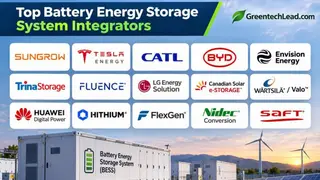
The global battery energy storage system (BESS) market is witnessing heightened competition in 2027, with Sungrow leading the Wood Mackenzie 2026 ranking based on project execution, grid-forming capabilities, and software integration. Tesla Energy remains a top contender due to its Megapack systems and Autobidder trading platform, while CATL and BYD are recognized for their battery manufacturing scale and eight-hour storage solutions. Developers prioritize suppliers with proven performance, delivery reliability, and long-term guarantees.
In November 2026, Sungrow emerged as the top global battery energy storage system (BESS) integrator according to Wood Mackenzie’s latest ranking, outpacing competitors like Tesla Energy, CATL, and BYD based on project execution, grid-forming capabilities, and software integration. Key milestones included the commercial operation of its 350 MW/1,243 MWh Hams Hall project in the UK—achieved within 20 days of grid connection—and a 150 MW/600 MWh commissioning in Nova Zagora, Bulgaria, in June 2026. These projects underscore Sungrow’s strength in rapid deployment and AC-integrated system delivery. Tesla Energy maintained its position as a top contender through its Megapack systems and Autobidder trading software, with over 77 GWh of operational deployments across 65 countries and 80 GWh annual production capacity. CATL leveraged its manufacturing scale and EnerQB technology to target eight-hour storage, notably through a 3 GW/24 GWh Australian development framework announced in October 2026. BYD emphasized vertical integration, supporting projects like Grenergy’s Oasis de Atacama in Chile, while Envision Energy and Trina Storage expanded via renewable integration and solar industry ties, respectively. Fluence stood out with a 12.6 GW backlog and 45.6 GW pipeline as of June 2026, highlighting its software-driven grid services model. The competition reflects broader trends: developers prioritize suppliers with proven delivery records, long-term guarantees, and seamless integration—factors shaped by earlier market volatility and supply chain disruptions. What remains unresolved is whether Sungrow’s early lead in execution will translate into sustained dominance amid evolving regulatory frameworks, cybersecurity concerns, and the need for longer-duration storage solutions beyond eight hours.
The rise of Sungrow and other top BESS integrators signals a maturing global energy transition, where grid stability and renewable integration are no longer optional but operational necessities. Utilities, independent power producers, and project developers now demand more than just battery capacity—they seek reliability, software intelligence, and lifecycle support, which could reshape how storage is contracted and deployed. This shift may empower vertically integrated players like Tesla and BYD while challenging pure-play system integrators without strong manufacturing or digital platforms. A comparable precedent is the 2010s solar boom, where early leaders like First Solar gained dominance through scale and supply chain control, only to be overtaken by Chinese manufacturers as costs fell and innovation accelerated. Today’s BESS market could follow a similar trajectory, with long-term performance and software capabilities becoming differentiators akin to efficiency ratings in solar panels. The next phase may involve deeper integration of storage with grid-forming inverters and AI-driven dispatch systems, potentially altering utility business models. What remains uncertain is how quickly regulatory policies—particularly around interconnection standards, market access, and recycling mandates—will evolve to match technological advances. Watch for shifts in supplier partnerships, especially as developers seek risk mitigation through diversified vendor strategies.