Leading Solar Module Test Firms Set Standards for Next-Gen PV Technologies in 2027
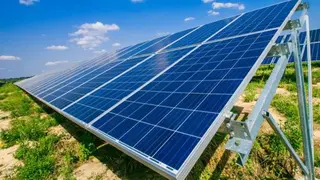
The global solar industry is expanding rapidly in 2027, driving demand for independent testing and certification of advanced photovoltaic technologies like TOPCon, heterojunction, bifacial, and back-contact modules. TÜV Rheinland, TÜV SÜD, Kiwa PVEL, DNV, and UL Solutions are key players providing reliability assessments, safety evaluations, and factory inspections to support manufacturers and investors. Their services help ensure performance consistency, reduce financial risk, and enable market access across international markets.
In November 2026, Kiwa PVEL released its PV Module Reliability Scorecard, revealing that 311 unique solar module bill-of-materials (BOMs) from 48 manufacturers achieved Top Performer status across reliability categories, with seven BOMs excelling in all seven tested areas—including performance under potential-induced degradation (PID), light-induced degradation (LeTID), and corrosion resistance. The report also found that 87% of participating manufacturers experienced at least one PQP test failure, and 61% of tested BOMs failed at least one reliability assessment. These findings underscore the growing complexity and variability in next-generation photovoltaic technologies like TOPCon, heterojunction (HJT), bifacial, and back-contact modules, which are now central to global solar expansion in 2027. The testing landscape is dominated by TÜV Rheinland, TÜV SÜD, Kiwa PVEL, DNV, UL Solutions, and others, each offering specialized services ranging from IEC certification (e.g., IEC 61215 and IEC 61730) to factory inspections and technical due diligence. These organizations are not just evaluators but strategic partners for manufacturers seeking international market access, investors requiring risk mitigation, and developers needing assurance that delivered modules match certified designs. The underlying driver is the industry’s rapid scaling—especially in high-efficiency technologies—where performance inconsistencies can lead to project delays, financial losses, or reputational damage. What remains unresolved is how these independent assessments will evolve as new materials like perovskite emerge, and whether standardization across testing protocols will keep pace with innovation.
The rise of independent solar module testing firms could significantly reshape investor confidence in renewable energy projects, particularly as developers face increasing pressure to deliver long-term performance. By providing verifiable, third-party evidence of reliability—such as Kiwa PVEL’s scorecard—these organizations may reduce financial risk and accelerate project financing, especially in emerging markets where regulatory frameworks are still developing. This could mirror the impact of early credit rating agencies on bond markets, where independent verification helped unlock capital. However, the proliferation of testing standards and varying test protocols may also create fragmentation, potentially confusing buyers or leading to inconsistent results across labs. The market may eventually see a push toward harmonized benchmarks, but for now, the lack of universal recognition means that project stakeholders must carefully vet which tests are most relevant to their needs. What’s next could include greater integration of testing data into digital platforms for real-time performance tracking, or increased regulatory reliance on accredited third parties—especially as governments set net-zero targets and demand higher accountability in clean energy deployment.