Markets Close Mixed as Nvidia Fallout and Inflation Weigh on Tech
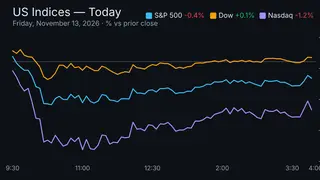
Wall Street ended Friday with mixed results, as the Dow Jones edged up 0.10% while the Nasdaq dropped 0.91% and the S&P 500 fell 0.40%, dragged down by Nvidia's sharp decline after CEO Jensen Huang resigned amid an investigation. Inflation data remained sticky, with the October PPI reaching a near four-year high of 6.5% year-over-year, reinforcing expectations of prolonged high interest rates. Energy stocks led gains, supported by rising oil prices due to Middle East tensions and new Alberta incentives.
On Friday, November 13, 2026, U.S. stock markets closed mixed amid a sharp decline in tech stocks following the unexpected resignation of Nvidia CEO Jensen Huang, who stepped down amid an ongoing investigation into a personal relationship. The Nasdaq Composite fell 0.91% to 25,136.27, dragged down by a broader semiconductor selloff that saw AMD drop 10.4% and Broadcom fall 5.3%. High-growth sectors such as aircraft manufacturing (-6.79%) and electrical machinery (-5.08%) also weakened as Treasury yields approached 5%, signaling persistent concerns about monetary policy. Meanwhile, the S&P 500 dipped 0.40% to 7,561.67, while the Dow Jones gained a modest 0.10% to 52,347.55. The VIX volatility index rose 3.16% to 19.29, reflecting heightened market unease. Inflation remained a key concern, with the October Producer Price Index (PPI) rising 6.5% year-over-year—its highest level in nearly four years—even though the monthly increase was slightly below forecast at 0.3%. This data reinforced expectations that the Federal Reserve would maintain high interest rates for longer than previously anticipated.
The energy sector emerged as a bright spot, with oil and gas industries leading gains due to rising crude prices fueled by Middle East tensions and new incentives from Alberta’s Oil Sands Growth Program. WTI Crude rose 0.30% to $89.01 per barrel. Gold prices declined slightly, falling 0.17% to $3,878.70, while gold and silver ores dropped 5.06%. Market participants are now turning their attention to upcoming events: Fed Chair Warsh’s speech on November 16, Nvidia’s Q3 earnings report under interim CEO Colette Kress on November 18, the release of FOMC meeting minutes on the same day, and the highly anticipated Anthropic IPO debut on November 19. The future direction of tech stocks, inflation control, and monetary policy remain uncertain.
The fallout from Nvidia’s leadership change underscores how deeply investor sentiment can be tied to individual executives in high-conviction sectors like semiconductors. This event could amplify volatility across tech-heavy indices, potentially affecting broader innovation funding and venture capital flows into AI and hardware startups. The persistent inflation data may delay any near-term rate cuts, prolonging pressure on consumer spending and corporate borrowing costs—especially for growth-oriented firms reliant on cheap capital. Energy gains, driven by geopolitical risk and policy incentives, could signal a shift in investment toward commodity-linked assets, possibly at the expense of long-term decarbonization efforts. A comparable precedent is the 2018 drop in semiconductor stocks after Intel’s leadership transition, which triggered broader tech sell-offs. What remains unclear is whether Nvidia’s interim leadership can stabilize investor confidence or if this marks a deeper structural concern within the sector. Market participants should watch for shifts in earnings guidance from other tech firms and any signals from the Fed that could clarify the path of interest rates.