Tech Sector Plummets After Nvidia CEO Resigns Amid Security Probe
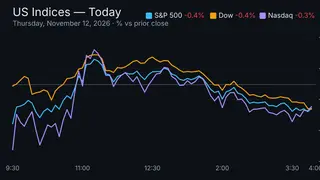
U.S. equities declined on Thursday as Nvidia's abrupt resignation of CEO Jensen Huang over personal conduct and national security concerns triggered a broad tech selloff, with the Nasdaq dropping 0.39%. The Dow Jones and S&P 500 also fell, while small-cap stocks tumbled hardest. Inflation data showed a hotter-than-expected CPI rise, pushing the 10-year Treasury yield to 5.05% and increasing market volatility. Energy stocks rose on geopolitical tensions, with WTI Crude climbing 2.52%.
On Thursday, November 12, 2026, U.S. equity markets declined broadly following the abrupt resignation of Jensen Huang, CEO of semiconductor giant Nvidia, amid allegations of personal misconduct and national security concerns. The Nasdaq Composite fell 0.39% to close at 25,366.09, while the S&P 500 and Dow Jones Industrial Average dropped 0.35% and 0.36%, respectively. The Russell 2000 suffered the sharpest decline, tumbling 1.66% as small-cap stocks reacted strongly to heightened market volatility. This sell-off was amplified by a hotter-than-expected October CPI report, which showed a 0.4% month-over-month increase and pushed the 10-year Treasury yield up to 5.05%, increasing pressure on growth-oriented equities. Nvidia’s shares plunged 10% in after-hours trading following the announcement, triggering a broader retreat from AI-related stocks, commonly referred to as the “halo trade.” Energy markets, however, rose on geopolitical tensions: WTI Crude climbed 2.52% to $88.71 amid President Trump’s hardline stance on Iran, which reinforced U.S. energy independence narratives. The VIX surged 6.92% to 18.70, signaling rising investor anxiety.
The resignation of Jensen Huang—whose leadership had been central to Nvidia’s dominance in AI chip development—has raised questions about corporate governance and national security oversight in high-tech firms. While the specific nature of the misconduct and security breaches remains undisclosed, the timing coincides with heightened scrutiny of foreign influence in critical technology sectors. Investors are now reassessing exposure to semiconductor and AI stocks, particularly those tied to U.S.-China tech competition. The broader market reaction reflects deeper concerns about inflation persistence and the Federal Reserve’s potential for another rate hike in December. Meanwhile, energy and industrial sectors faced divergent fates: while oil stocks advanced, capital-intensive industries like aircraft manufacturing and industrial machinery declined sharply due to higher-for-longer interest rate expectations. What remains unresolved is whether Huang’s departure will lead to a leadership transition at Nvidia that maintains investor confidence or triggers further instability in the tech sector.
The abrupt resignation of Nvidia’s CEO could have far-reaching implications beyond the company’s stock price, potentially reshaping investor sentiment toward high-growth technology firms and AI-driven equities. As a bellwether for the semiconductor industry, Nvidia's turmoil may prompt broader reassessments of corporate governance in tech firms with significant national security implications. This event may also intensify regulatory scrutiny on foreign investment in U.S. critical infrastructure, particularly in emerging technologies like AI and quantum computing. The market’s reaction—especially the sharp drop in small-cap stocks and surge in volatility—suggests that investor confidence in growth narratives is fragile, especially amid persistent inflation and uncertain monetary policy. A comparable precedent exists in 2018, when Uber’s CEO stepped down amid governance issues, leading to a temporary loss of investor trust and a reevaluation of high-flying tech valuations. However, unlike then, today’s context includes heightened geopolitical tensions and tighter regulatory oversight, which could amplify the fallout. What may follow is increased volatility in AI-related ETFs, potential shifts in capital allocation toward more stable sectors, and closer monitoring of executive conduct in defense-adjacent industries. The next key indicators to watch are the upcoming PPI release, Fed commentary on December rate decisions, and any official statements from Nvidia or government agencies regarding the security probe.