Black residents in Cheek, Texas, challenge Exxon Mobil’s carbon storage project over safety and trust concerns
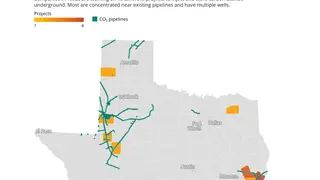
A proposed carbon dioxide storage project by Exxon Mobil near Beaumont, Texas, has sparked opposition from the predominantly Black community of Cheek, where residents fear groundwater contamination, potential leaks, and inadequate emergency response. The Texas Railroad Commission approved the project in September after gaining federal permitting authority, despite local concerns about long-term safety and environmental justice. Critics, including Harvard professor Naomi Oreskes, argue that carbon capture and storage may distract from more effective climate solutions.
In September 2026, the Texas Railroad Commission approved Exxon Mobil’s proposed carbon dioxide storage project near Cheek, Texas, marking a pivotal moment for carbon capture and storage (CCS) in the state. The project, located in a predominantly Black, rural community with a significant elderly and working-class population, aims to inject CO₂ underground to prevent emissions from entering the atmosphere—potentially equivalent to the annual emissions of 2 million cars across seven existing corporate agreements. This approval followed the commission’s acquisition of federal permitting authority late in 2025, enabling it to fast-track such projects despite local opposition. Residents of Cheek, including Douglas Cormier, president of the Cheek Texas Community Association, have voiced deep concerns over groundwater contamination, potential leaks, and inadequate emergency preparedness, emphasizing they do not want to be “test subjects” for unproven technology. Critics like Harvard professor Naomi Oreskes argue CCS is a “dangerous distraction” from more effective climate strategies, citing a ProPublica and Drilled investigation showing that CCS would require unsustainable resources to meaningfully reduce warming. Meanwhile, the Environmental Defense Fund acknowledges community safety concerns but supports CCS as part of broader climate infrastructure, while state Representative Drew Darby has urged rapid project deployment. The Railroad Commission maintains it has a strong record in protecting drinking water and cites required monitoring, automatic shut-off systems, and emergency coordination as safeguards.
The Cheek case highlights the growing tension between large-scale climate infrastructure and environmental justice, particularly in marginalized communities near industrial zones. If approved projects like this one proceed without meaningful community consent or robust oversight, they may deepen existing inequities by concentrating risks in already burdened areas. The situation echoes earlier controversies such as the Dakota Access Pipeline protests, where Indigenous communities raised similar concerns about health, safety, and sovereignty. Here, the lack of trust stems not only from technical fears but also from a history of regulatory failure and perceived corporate prioritization over public welfare. Should this project move forward without addressing community demands for transparency and emergency preparedness, it could set a precedent that undermines future climate initiatives in vulnerable regions. Conversely, if regulators respond to these concerns by requiring stronger safeguards or delaying approvals, it may slow the rollout of CCS—potentially affecting federal tax credit utilization and broader decarbonization timelines. The outcome could influence how other states balance climate goals with community rights, especially as more carbon storage projects await approval across Texas and beyond.