Bipartisan Permitting Bill Sparks Divisions Among Clean Energy and Industry Groups
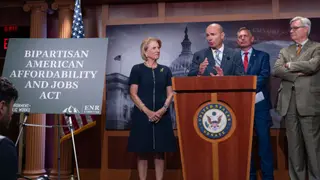
The U.S. Senate is debating the Bipartisan American Affordability and Jobs Act, a 500-page permitting reform bill that has drawn support from labor unions, solar and storage companies, electric utilities, and the American Petroleum Institute. Proponents argue the bill will accelerate clean energy and infrastructure development, reduce project delays, and lower household energy costs. Critics, including many environmental and climate advocacy groups, remain concerned about potential environmental trade-offs despite promises of stronger protections.
The U.S. Senate is currently debating the Bipartisan American Affordability and Jobs Act (BAAJA), a 500-page permitting reform bill introduced by Senator Sheldon Whitehouse (D-RI) and supported by a broad coalition including labor unions, solar and storage companies, electric utilities, and the American Petroleum Institute. Proponents argue the legislation would streamline project approvals, reduce delays in clean energy and transmission infrastructure development, and lower household energy costs by creating a more predictable permitting process. The bill has drawn backing from 300 solar and storage firms via the Solar Energy Industries Association, the AFL-CIO, and the Edison Electric Institute, which represent investor-owned electric utilities nationwide. Industry leaders like Maryann Mannen of Marathon Petroleum claim the bill would reduce legal barriers for oil and gas pipeline expansion while maintaining environmental protections. However, the bill has ignited fierce opposition from 11 tribal organizations, including the National Congress of American Indians and the Native American Rights Fund, who argue that revisions to Section 106 of the National Historic Preservation Act undermine Tribal sovereignty and weaken consultation requirements. Environmental and climate justice groups such as the Sierra Club, NAACP, Climate Justice Alliance, and NRDC oppose the bill, citing weakened environmental safeguards, threats to sacred sites, and disproportionate impacts on frontline communities. Noted climate figures including Al Gore, Michael Mann, and Bill McKibben have voiced skepticism, warning the bill may entrench fossil fuel interests and delay meaningful climate action. The outcome remains uncertain, with no clear timeline for a Senate vote or final passage.
The BAAJA debate reflects a broader national tension between accelerating clean energy deployment and preserving environmental and Indigenous rights. While faster permitting could help meet rising electricity demand and reduce long-term emissions, critics warn that weakening public participation and environmental review may lead to irreversible ecological harm and deepen inequities in affected communities. The bill’s support from fossil fuel interests and labor unions suggests a strategic alignment that could reshape energy policy, but may also undermine trust in climate governance. A comparable precedent is the 2021 Infrastructure Investment and Jobs Act, which balanced infrastructure expansion with environmental provisions, though it faced less opposition from industry. The current moment may signal a pivotal shift: if BAAJA passes, it could set a precedent for future permitting reforms, influencing how federal agencies balance speed and accountability. However, if it fails or is significantly amended, it may delay grid modernization and renewable deployment. What’s next could hinge on whether environmental and Indigenous groups can mobilize enough political pressure to demand stronger safeguards, or whether industry and labor coalitions succeed in pushing the bill through with minimal changes.