Trump's Alleged Offer of NATO Accession for Donbas Sparks Doubt Over US Commitment
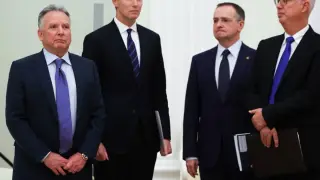
A report suggests that former U.S. President Donald Trump offered Russia a deal in which Ukraine would cede control of Donbas in exchange for NATO membership or similar security guarantees. The proposal raises concerns about the credibility of such assurances without firm U.S. backing and questions Moscow’s willingness to honor any agreement. The suggestion also marks a shift in U.S. strategy, now encouraging European involvement in future Ukraine peace talks.
In November 2026, reports emerged that former U.S. President Donald Trump, through envoys Jared Kushner and Steve Witkoff, had proposed a deal to Russia in which Ukraine would cede control of the Donbas region in exchange for NATO membership or equivalent security guarantees. The proposal was reportedly discussed during a meeting at the Kremlin between Kushner, Witkoff, Russian officials including Vladimir Medinsky and Kirill Dmitriev, and Russian President Vladimir Putin. This marked a sharp reversal from previous U.S. policy, which had excluded Europe from formal Ukraine peace negotiations for 18 months and emphasized American leadership in security commitments. The proposal coincided with Russia’s maximalist demands at the Abu Dhabi talks—calling for NATO to withdraw to its 1997 troop levels, effectively removing forces from Eastern Europe, Finland, and Sweden—raising questions about Moscow’s willingness to accept a deal that would expand NATO’s presence in Ukraine. Ukrainian President Volodymyr Zelensky did not reject the offer outright but insisted any such decision must be confirmed through a national referendum, signaling strategic delay. The core issue remains: without explicit U.S. military backing, European security guarantees—especially those resembling NATO Article IV or V—are seen as legally and practically hollow, given Europe’s limited defense capacity.
The reported proposal could deepen skepticism among Eastern European nations about U.S. reliability in security matters, particularly if Washington appears to prioritize bilateral normalization with Russia over collective defense. If the U.S. steps back from guaranteeing Ukraine’s security, even under a NATO-like framework, it may prompt NATO members to reassess their own defense commitments and potentially accelerate military spending—though such moves could be undermined by political hesitancy. The idea of shifting the burden to Europe echoes past debates over burden-sharing, but with far greater stakes: if Europe cannot credibly defend Ukraine, any agreement risks becoming a hollow diplomatic gesture. A comparable precedent is the 1938 Munich Agreement, where Western powers appeased aggression at the expense of smaller allies, only to face renewed conflict. While not identical, the current situation raises similar concerns about trust and strategic credibility. What may follow includes greater European defense integration, increased U.S. military presence in Europe as a hedge, or a hardening of Ukraine’s stance against territorial concessions—especially if domestic sentiment remains firmly opposed to giving up Donbas. The real test will be whether any deal is enforceable, and whether Moscow’s actions align with its stated goals—or merely serve as leverage for broader geopolitical gains.