US Envoy Kushner Says Trump Seeks European Involvement in Ukraine Peace Process
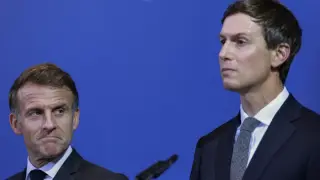
US special envoy Jared Kushner stated that President Donald Trump wants European allies actively involved in any Ukraine peace agreement, opposing unilateral decisions. He conveyed to Trump the strong and unified support European leaders expressed for Ukraine during the Coalition of the Willing summit in Berlin. Kushner also noted progress toward NATO-style security guarantees for the region.
On November 19, 2026, U.S. special envoy Jared Kushner announced during a joint press conference in Berlin that President Donald Trump intends to involve European allies in any future Ukraine peace agreement, rejecting unilateral U.S. action. This statement followed the Coalition of the Willing summit co-hosted by Germany, France, and the UK, where European leaders reaffirmed their unified support for Ukraine. Kushner and fellow envoy Steve Witkoff conveyed this consensus to Trump, who had just concluded a trilateral meeting with Russian President Vladimir Putin and Chinese leader Xi Jinping in Shenzhen—events that raised concerns among European officials about being sidelined. Kushner emphasized that Trump is open to offering Ukraine NATO-style security guarantees, particularly Article 5-like mutual defense commitments, though he stressed such arrangements must align with American interests and be part of a broader security framework. He also noted that Moscow has become increasingly receptive to the idea of such guarantees, possibly to avoid further conflict. The summit aimed to solidify Western unity ahead of potential negotiations, with European leaders seeking to ensure Kyiv’s representation and influence in any peace process. However, the absence of Ukrainian and European participation in the Shenzhen summit has created tension, underscoring the delicate balance between U.S. diplomacy and European strategic autonomy.
The reported shift in U.S. posture—prioritizing European coordination over unilateralism—could strengthen transatlantic cohesion, but also expose rifts if European expectations diverge from American strategic calculations. If Trump proceeds with NATO-style guarantees, it may signal a long-term commitment to European security, potentially influencing defense spending and alliance dynamics across NATO. However, the lack of clarity on enforcement mechanisms or the scope of U.S. obligations raises uncertainty for Ukraine and its allies. The fact that Russia appears to accept the concept of such guarantees, even if skeptically, may reflect a strategic recalibration, possibly aiming to secure a frozen conflict rather than a decisive defeat. A comparable precedent is the 1990s Minsk agreements, which failed due to weak enforcement and divergent international interests. Here, the outcome may hinge on whether the U.S. can balance its alliance commitments with pragmatic diplomacy. What’s next remains uncertain: whether Europe can maintain unity, how Russia will respond to any formal guarantees, and whether Ukraine will gain sufficient leverage in negotiations. The coming months will likely test whether this moment marks a genuine pivot toward inclusive diplomacy or a temporary alignment before a more transactional approach emerges.