British Prime Minister Burnham Vows Unwavering Support for Ukraine Amid Berlin Summit
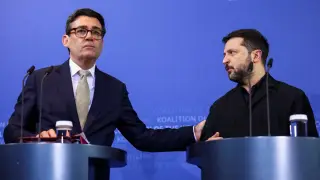
British Prime Minister Andy Burnham pledged that the UK would stand with Ukraine 'for as long as it takes,' announcing a new commitment of 1,000 long-range drones. He emphasized that Europe is ready for peace negotiations but will only discuss broader European security with Russia after a Ukraine-Russia agreement is reached. The statement was made during the Coalition of the Willing summit in Berlin, held shortly after a trilateral summit between Trump, Putin, and Xi.
On November 19, 2026, British Prime Minister Andy Burnham reaffirmed the UK’s unwavering support for Ukraine during the Coalition of the Willing summit in Berlin, pledging a new military aid package worth £260 million ($342 million), including 1,000 long-range drones and fast attack boats in coordination with Norway. The announcement came just hours after a historic trilateral summit between U.S. President Donald Trump, Russian President Vladimir Putin, and Chinese President Xi Jinping in China, which raised questions about the future of Western unity on Ukraine. Burnham emphasized that Europe is prepared for peace negotiations but will only engage Moscow on broader European security issues once Ukraine and Russia reach a bilateral agreement. This stance was echoed in a joint statement by leaders of the UK, France, Germany, and Ukraine, which called for direct Ukraine-Russia talks with U.S. and European participation and advocated for legally binding security guarantees post-ceasefire, including a U.S.-led ceasefire monitoring mechanism and a European-led multinational force backed by Washington. President Volodymyr Zelensky, speaking at the same press conference, reported damage to St. Volodymyr’s Cathedral and embassies of Austria and the Netherlands in Kyiv, underscoring the urgency of bolstering air defenses and protecting critical infrastructure. He also signaled openness to four-way peace talks involving Ukraine, Europe, the U.S., and Russia, while separately meeting with U.S. envoys Jared Kushner and Witkoff to discuss timing and agenda.
The broader context includes growing Western concern over shifting U.S. policy under Trump, who, via a call from Air Force One, urged European involvement in a Ukraine peace deal without unilateral imposition. This marks a pivot from earlier U.S. leadership in the conflict, raising questions about the durability of transatlantic coordination. The UK’s continued military commitment, despite domestic political pressures, reflects a strategic effort to maintain credibility among Eastern European allies. However, unresolved issues remain: the exact terms of the proposed security guarantees, the feasibility of a ceasefire monitoring system, and whether Russia will engage seriously in negotiations. The role of the U.S. in shaping the final agreement remains uncertain, particularly given Trump’s recent outreach to Moscow and skepticism about continued aid. What is not yet known is whether European leaders will align with the UK’s conditional stance on security talks or pursue more flexible approaches.
The UK’s renewed military commitment and conditional peace framework could strengthen European cohesion in supporting Ukraine, potentially reinforcing NATO’s credibility amid shifting U.S. foreign policy. However, the emphasis on requiring a Ukraine-Russia agreement before broader security talks may delay diplomatic progress, especially if Moscow refuses to negotiate in good faith. The involvement of the U.S. through envoys like Kushner suggests a desire to maintain influence, but Trump’s recent outreach to Putin may signal a broader pivot toward engagement with Russia, which could undermine Western unity. If the U.S. reduces its role in future negotiations, European nations may be forced to assume greater responsibility, potentially straining defense budgets and alliance coordination. A comparable precedent is the 2015 Minsk agreements, which failed due to lack of enforcement and political will—this new framework may face similar risks if not backed by credible mechanisms. What could emerge is a more fragmented diplomatic landscape, with Europe acting as a mediator while the U.S. pursues bilateral interests. The coming months will reveal whether the Coalition of the Willing can sustain momentum, especially as winter intensifies pressure on Ukraine’s infrastructure and energy systems.