Ember Report Finds Wind Integration Lowers Renewable Costs by 18% and Challenges 706 GW of Fossil Fuel Projects
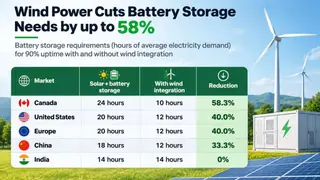
A new Ember report reveals that combining wind power with solar and battery storage reduces the median cost of meeting 90% of electricity demand from $105/MWh to $86/MWh, saving $19/MWh. The analysis shows wind significantly cuts battery storage needs—by up to 58% in major markets like the US, Europe, and China—while enabling reliable, low-cost renewable supply. Wind-solar-battery systems could now undercut 706 GW of planned coal and gas projects globally.
The Ember report could accelerate the shift away from fossil fuel infrastructure by making renewable systems with wind more economically viable than planned coal and gas plants, particularly in temperate and northern regions. This may pressure governments and investors to reconsider approvals for new fossil projects, especially in markets like China, where 91 GW of planned capacity now faces a cheaper alternative. Utilities and grid operators may prioritize hybrid wind-solar-battery systems over traditional peaking plants, potentially reshaping investment flows in energy infrastructure. The report’s focus on cost thresholds below $100/MWh aligns with broader trends in clean energy economics but highlights a regional disparity: equatorial regions benefit less from wind integration, which could influence where future renewable investments are concentrated. A comparable precedent is the 2010s shift when solar costs dropped so rapidly that many planned coal plants were canceled; this report may signal a similar inflection point for wind-solar hybrids. What remains uncertain is how quickly regulators and financial institutions will act on these findings, especially in developing economies where grid stability concerns may still favor fossil backup. The next phase will likely involve deeper analysis of grid integration challenges and policy frameworks that can support rapid deployment.