India Positioned to Lead Global Green Fuel Production Amid European Demand Growth
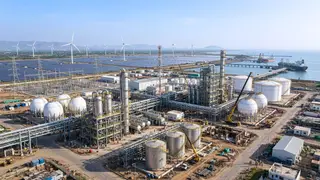
India is emerging as a competitive hub for green ammonia and methanol production due to low-cost renewable energy and supportive national and state policies. Growing decarbonization needs in Europe are driving demand for green hydrogen derivatives in shipping, aviation, and industry. However, commercial challenges remain in aligning pricing, volume, contract terms, and infrastructure investment to enable scalable, bankable green fuel value chains.
India is positioning itself as a leading global producer of green ammonia and green methanol, driven by abundant low-cost renewable energy and supportive national and state-level policies. This development is unfolding in late 2026, as reported by Renewable Watch, with India’s competitive advantage rooted in its rapidly expanding solar and wind capacity, which reduces the cost of producing green hydrogen—the foundational input for green fuels. Simultaneously, Europe’s stringent decarbonization targets in hard-to-abate sectors such as shipping, aviation, and refining are creating a growing demand for green hydrogen derivatives. The report highlights that while India’s production potential is strong, commercialization remains hindered by persistent mismatches: off-takers struggle to commit to long-term contracts, producers require such commitments for financing, and infrastructure—including storage, handling, and export bunkering—lacks the investment certainty needed to scale. Key actors include Indian renewable developers, European energy firms, and policy bodies in both regions, each seeking to secure supply chains and meet climate goals. The unresolved challenge lies in aligning these interests through innovative commercial models, such as the proposed Green Fuel Hub Market Development and Commercialization Facility, which aims to bridge demand-supply gaps and coordinate infrastructure investment. The next steps depend on whether such mechanisms can be implemented at scale, and whether international buyers will accept the risks of early-stage green fuel imports.
India’s emergence as a green fuel hub could significantly reshape global clean energy trade, particularly by enabling Europe to meet its decarbonization targets in sectors where electrification is impractical. If successful, this shift may reduce Europe’s reliance on domestic hydrogen production, which faces land-use and grid constraints, while creating new export opportunities for India. The societal impact may include job creation in India’s renewable and chemical sectors, as well as lower carbon emissions in European transport and industry. However, the success of this model hinges on overcoming financial and logistical barriers that have stalled similar initiatives in the past—such as the early attempts to build green hydrogen corridors in the EU or Australia. A comparable precedent is the development of liquefied natural gas (LNG) infrastructure in the 2000s, which required long-term contracts and public-private coordination to scale. Here, the risk is that without a credible mechanism to de-risk investments, green fuel trade may remain fragmented and underdeveloped. What to watch for is whether the proposed Green Fuel Hub facility can attract multilateral funding and pilot projects by 2027, and whether European regulators will introduce policy incentives to support import commitments. The outcome could influence how other emerging economies position themselves in the global green economy.