ULA Attributes Vulcan Rocket Failure to BE-4 Engine Performance Issues
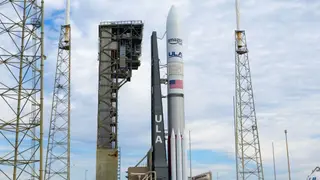
United Launch Alliance (ULA) has determined that the failure of the Vulcan rocket on November 15, 2026, was caused by low booster performance shortly after liftoff, with preliminary findings pointing to the BE-4 engines as the source of the anomaly. The mission, which aimed to deploy 40 Amazon Leo satellites, lost telemetry around 10 minutes into flight, leading to stage separation at low altitude and insufficient velocity. ULA has committed to a transparent investigation and will work with its customer to return to flight.
On November 15, 2026, United Launch Alliance (ULA) launched the VC6L variant of its Vulcan rocket from Space Launch Complex 41 in Florida, aiming to deploy 40 Amazon Leo broadband satellites into low Earth orbit. The mission failed approximately 10 minutes after liftoff when telemetry was lost, leading to premature stage separation at low altitude and insufficient velocity to achieve orbit. ULA’s preliminary investigation, conducted in coordination with the Federal Aviation Administration (FAA), identified the root cause as low booster performance in the core stage shortly after launch, with the BE-4 engines—developed by Blue Origin and powering the core stage—now under scrutiny. The solid rocket boosters, which had previously experienced issues, performed nominally, and the second-stage Centaur V functioned correctly after separation, but could not compensate for the initial underperformance. The rocket was 215 feet (65.5 meters) tall and carried six solid rocket boosters, marking the first of 38 Amazon Leo missions planned. Blue Origin CEO Dave Limp acknowledged ULA’s lead in communications, stating that his team was supporting the investigation with BE-4 data while preparing the New Glenn rocket for its return to flight after a May 2026 hotfire test explosion. Amazon has since shifted the remaining 36 Leo satellites to an Ariane 64 launch on November 23, 2026, from French Guiana, using the most powerful configuration of the Ariane 6. The full investigation remains ongoing, with no final conclusions yet available.
The failure of the Vulcan rocket could delay the expansion of Amazon’s global broadband constellation, potentially affecting connectivity initiatives in remote or underserved regions. As Amazon relies on multiple launch providers—including Arianespace and SpaceX—this incident may accelerate diversification of launch contracts, reducing dependence on any single vehicle. The BE-4 engine’s role in both Vulcan and New Glenn raises concerns about broader implications for Blue Origin’s development timeline and ULA’s reliability, especially as both companies aim to compete with SpaceX’s dominant Falcon 9. A comparable precedent is the 2015 Falcon 9 explosion during a CRS-7 mission, which temporarily disrupted NASA’s cargo resupply efforts and prompted significant redesigns. While the current situation is not yet a full-scale crisis, the delay in Vulcan’s return to flight may influence future government and commercial launch contracts. What remains uncertain is whether the BE-4 issue is isolated or indicative of a systemic flaw, and how quickly ULA and Blue Origin can resolve it. The next critical step will be the public release of the full investigation report, which could shape confidence in next-generation launch vehicles and influence investment in space infrastructure.