ACME Solar Secures 25-Year PPA for 220 MW Solar and Battery Project in India at ₹2.764/kWh
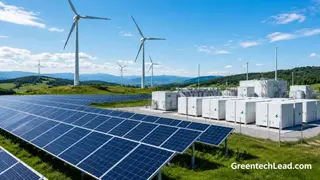
ACME Solar Holdings’ subsidiary ACME Greentech Sixteen signed a 25-year power purchase agreement with Rewa Ultra Mega Solar for a 220 MW solar-plus-battery storage project at Morena Solar Park in Madhya Pradesh, India. The contract sets the electricity tariff at ₹2.764 per kWh, with commercial operation scheduled by December 31, 2027. The agreement secures long-term off-take and is expected to generate significant revenue based on annual electricity delivery.
ACME Greentech Sixteen, a subsidiary of ACME Solar Holdings, has secured a 25-year power purchase agreement (PPA) with Rewa Ultra Mega Solar for a 220 MW solar-plus-battery storage project at the Morena Solar Park in Madhya Pradesh, India. The contract locks in an electricity tariff of ₹2.764 per kWh, with commercial operation targeted by December 31, 2027. This follows ACME’s initial project announcement in February 2026 and marks a significant step toward long-term revenue certainty for the project. At this rate, every 100 million units of electricity delivered would generate approximately ₹27.64 crore in gross revenue before adjustments. The agreement ensures stable off-take, critical for securing financing and enabling large-scale renewable deployment. However, the article does not specify the battery storage capacity in MW or MWh, nor does it disclose the project’s total investment cost or annual electricity volume under contract.
The development reflects India’s ongoing push to scale up solar infrastructure with integrated storage, particularly in high-potential zones like Madhya Pradesh’s Morena Solar Park. Rewa Ultra Mega Solar, a state-owned entity, continues to play a central role in facilitating large-scale renewable projects through long-term PPAs. ACME Solar, known for its aggressive expansion in India’s solar market, likely seeks to solidify its position as a major player by locking in stable revenue streams and demonstrating technical and financial viability of hybrid solar-battery systems. The project may also support India’s broader climate goals, including its 2030 renewable energy targets. What remains unknown includes the exact battery capacity, the source of project financing, and whether this tariff is competitive with other recent Indian solar bids.
This PPA could strengthen investor confidence in India’s renewable sector by demonstrating that long-term contracts for hybrid solar-battery projects are viable at a fixed tariff. It may encourage similar deals across India’s solar parks, especially where grid stability and dispatchability are priorities. The project’s success could influence policy decisions around storage integration in future auctions. However, the lack of transparency on battery capacity raises questions about how much value the storage component adds to the overall project economics. A comparable case is the 2019 Bhadla Solar Park PPA, which set a benchmark for solar tariffs but did not include storage—this new agreement may signal a shift toward more resilient, dispatchable renewable assets. The broader impact may be felt in India’s power market, where such projects could reduce reliance on peaking plants and improve grid flexibility. What to watch for next is whether this tariff level becomes a reference point for future bids, or if it remains an outlier due to project-specific factors.