Jeffries Prioritizes Citizenship Bill for DACA and TPS Recipients in New Congress
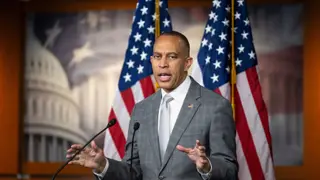
House Minority Leader Hakeem Jeffries declared the Dream and Promise Act a top priority for Democrats, calling for immediate action on a path to citizenship for DACA and TPS recipients. He also urged reforms to Immigration and Customs Enforcement and expressed hope for bipartisan cooperation on immigration. While Democrats agree on restoring expired health insurance subsidies, consensus on expanding healthcare remains under discussion.
House Minority Leader Hakeem Jeffries, expected to become Speaker of the House in January 2027 following a closed-door Democratic caucus vote, has declared the Dream and Promise Act a top legislative priority for the incoming Democratic majority. The bill, which aims to provide a pathway to citizenship for Deferred Action for Childhood Arrivals (DACA) recipients and Temporary Protected Status (TPS) holders, is being positioned for immediate action after years of stalled progress under Republican control. Jeffries emphasized the need for comprehensive immigration reform, calling for a secure border while criticizing the current system as “broken.” He also urged reforms to Immigration and Customs Enforcement (ICE), proposing to redirect funds from the Republican-backed “One Big Beautiful Bill Act,” which allocated resources to the agency. While Democrats agree on restoring expired health insurance subsidies from the Affordable Care Act that lapsed at the end of 2025, consensus remains elusive on broader healthcare expansion, including potential changes to Medicare eligibility age. The party has formed a healthcare working group led by Reps. Alexandria Ocasio-Cortez and Terri Sewell to develop policy proposals, signaling a deliberate, internally coordinated approach. Jeffries’ decision to hold a recorded vote for leadership—unlike Nancy Pelosi’s acclamation in 2007—reflects a strategic effort to assert unity amid internal progressive challenges, particularly from members aligned with the Democratic Socialists of America. The outcome of this vote may influence the party’s ability to unify around complex legislative agendas.
Jeffries’ prioritization of the Dream and Promise Act could significantly impact the lives of hundreds of thousands of undocumented immigrants, particularly young people and families from countries like El Salvador, Haiti, and Honduras who rely on TPS. If passed, the legislation may stabilize communities, boost economic participation, and reduce the fear of deportation, potentially strengthening social cohesion and labor market stability. The push for ICE reform may also influence how federal immigration enforcement operates, possibly shifting resources toward processing and integration rather than detention and removal. However, the lack of consensus on healthcare expansion suggests internal party divisions may slow broader reform, despite widespread agreement on restoring subsidies. This dynamic echoes the 2009 healthcare debate, where initial agreement on key fixes gave way to prolonged conflict over universal coverage. The outcome may depend on whether progressive factions can be reconciled with moderate Democrats. What remains to be seen is whether Jeffries can leverage his leadership position to build bipartisan support on immigration, especially given the current political climate. His ability to deliver on both immigration and healthcare could shape the Democratic Party’s credibility and influence in the next Congress.