Obama Urges Democrats to Push for Universal Health Care Beyond Obamacare
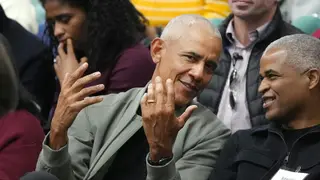
Former President Barack Obama told House Democrats that the Affordable Care Act was a makeshift solution and urged them to pursue a major expansion of Medicare. He endorsed proposals including lower eligibility age and coverage for dental, hearing, and vision services. The remarks signal growing unity within the Democratic Party on health care, with Speaker-elect Hakeem Jeffries supporting a significant shift toward a single-payer model.
On November 15, 2026, former President Barack Obama addressed House Democrats at Bender Arena in Washington, D.C., urging the incoming Democratic Congress to move beyond the Affordable Care Act (ACA) and pursue a major expansion of Medicare. He described the ACA as a “jerry rigged” solution built atop a flawed private insurance system and emphasized that restoring pandemic-era subsidies—set to expire under the previous Republican Congress—was not sufficient. Obama called for transformative change, including lowering the Medicare eligibility age, expanding coverage to include dental, hearing, and vision services, and advancing toward a single-payer model. His remarks came amid growing unity within the Democratic Party on health care, signaled by Speaker-elect Hakeem Jeffries’ public endorsement of a broad Medicare expansion that would cover all children and lower-income populations. This marks a shift from past internal divisions, such as the 2024 Senate race in Kansas where candidate Adam Hamilton distanced himself from Bernie Sanders’ Medicare for All movement. The new Democratic governors in Southern states like Georgia, Texas, and Wisconsin—elected on platforms including Medicaid expansion—now face pressure to push their Republican-controlled legislatures to accept federal funds and extend coverage to low-income adults. While Trump’s 2025 Medicaid cuts may complicate implementation, the possibility of expansion remains viable. The Democratic Congress is expected to pass subsidy restoration and launch formal proposals for Medicare expansion, setting up a high-stakes political showdown with the Republican president.
Obama’s call for a bold health care agenda could signal a pivotal moment in the evolution of U.S. health policy, potentially reshaping the Democratic Party’s platform and public expectations. If Democrats succeed in expanding Medicare and restoring subsidies, millions of Americans—particularly in Southern states with historically low Medicaid enrollment—could gain access to affordable, comprehensive care. This could strengthen public trust in government programs and shift long-standing debates about the role of public versus private insurance. The movement may also influence broader societal trends, such as workforce mobility and economic security, by reducing medical debt and improving health outcomes. A comparable precedent is the 2010 passage of the ACA, which redefined health care access but left millions uncovered. The current push could be seen as a second wave of reform, more ambitious and unified. However, the path remains uncertain: Republican opposition, especially in state legislatures, may stall Medicaid expansion, and Trump’s veto power could block federal funding. What’s next could hinge on whether Democrats maintain unity and whether public demand for universal coverage grows stronger. The outcome may determine whether the party positions itself as a champion of structural change or a caretaker of incremental fixes.