Amazon Offers Five Security Camera Deals for Doors, Driveways, and Indoor Use
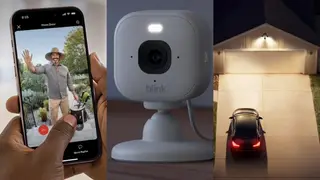
Amazon is offering discounted Ring and Blink security cameras for various home monitoring needs, including a Ring Floodlight Cam 2K for dark driveways with motion-activated lighting and 2K video. The Blink Mini 2K+ provides indoor monitoring with night vision and two-way audio. Other models cover front doors, indoor spaces, and larger properties, with options for both wired and battery-powered setups.
On November 18, 2026, Amazon rolled out a series of discounted security camera deals featuring Ring and Blink models tailored to specific home monitoring needs. The promotions include the Ring Floodlight Cam 2K, priced at $99.99 (originally $199.99), which combines 2,000-lumen motion-activated lighting with 2K video and 6x Enhanced Zoom for driveways and dark outdoor areas. The Blink Mini 2K+ is available for $15.99 (down from $39.99), offering indoor monitoring with 2K resolution, night vision, and two-way audio via plug-in power. The Ring Battery Doorbell 2K, reduced to $39.99 (from $99.99), provides 2K video and live viewing for front doors without requiring wiring. The Ring Outdoor Cam 2K, priced at $49.99 (originally $99.99), uses a rechargeable battery for flexible placement in backyards or side gates. Finally, the Blink Outdoor 4 Five-Camera Bundle, now $104.99 (down from $369.98), includes five wireless outdoor cameras, a Battery Doorbell 2K+, and a Sync Module Core, enabling coverage across multiple zones. These deals reflect Amazon’s strategy to drive early holiday sales ahead of Black Friday 2026, capitalizing on consumer interest in home security amid rising concerns over deliveries and property safety. The shift toward affordable, modular systems—especially battery-powered and plug-in models—caters to renters and homeowners alike who want scalable, non-invasive solutions. Ring and Blink, owned by Amazon, aim to expand their ecosystem by lowering entry barriers. However, the long-term sustainability of battery life, especially in high-activity zones, remains unverified, and the need for optional subscriptions for video history introduces ongoing costs. It is not yet known how these promotions will affect market share among competitors like Arlo or Google Nest, nor whether Amazon will extend similar deals to other smart home categories.
These security camera deals could significantly influence consumer behavior by normalizing surveillance in everyday domestic life, particularly among urban and suburban households. The affordability and ease of installation may encourage broader adoption, especially among renters who previously avoided permanent installations. As more people integrate these devices, concerns about digital privacy, data storage, and potential misuse may grow, especially given that recorded video history requires a paid subscription. The market for smart home security may see increased competition, pushing other brands to match pricing or enhance features. A comparable precedent is the rapid adoption of smart speakers in the mid-2010s, which initially raised privacy alarms but eventually became standard household items. The current trend may follow a similar arc, with public awareness rising alongside usage. However, it remains uncertain whether consumers will prioritize privacy over convenience, or whether regulatory scrutiny will increase as surveillance becomes more pervasive. What to watch for next is how Amazon’s bundling strategy—offering multi-camera systems at steep discounts—could reshape expectations for home security, potentially making standalone devices seem outdated. The long-term impact on neighborhood safety, property values, and even law enforcement cooperation may also evolve, though these outcomes are still speculative.