Ukrainian Attacks Reduce Russian Oil Refining Capacity by 45% in Past Three Weeks
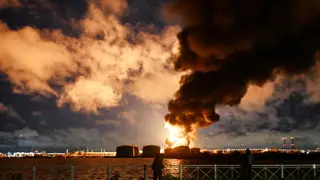
Ukrainian strikes over the past 20 days have reduced Russia’s crude oil processing by 45%, down to 400,000 metric tons per day from 700,000, according to Reuters citing industry sources. Fifteen of Russia’s 35 major refineries have had operations disrupted or halted. President Volodymyr Zelensky stated that 55% of Russia’s refining capacity is now offline, as attacks continue despite U.S. pressure on Ukraine to cease targeting oil infrastructure.
Over the past 20 days, Ukrainian military operations have significantly disrupted Russia’s oil refining infrastructure, reducing daily crude processing from 700,000 metric tons at the end of October to approximately 400,000 metric tons—a 45% decline. According to Reuters, citing industry sources, 15 of Russia’s 35 major refineries have experienced operational disruptions or complete halts. Key targets include the Ilsky refinery in southern Russia, an oil depot in Azov, a major facility in Volgograd, and Russia’s largest refinery. These strikes occurred amid a broader campaign that has escalated since late October, with President Volodymyr Zelensky stating on November 15 that 55% of Russia’s refining capacity is now offline—up from a reported 30% reduction just five days earlier. The attacks have coincided with a U.S.-brokered agreement between Russian President Vladimir Putin and former U.S. President Donald Trump, announced on October 9, permitting Russian diesel exports to the U.S., and a unilateral U.S.-imposed energy ceasefire on October 11. Despite this, Ukraine has maintained its offensive, citing Moscow’s continued attacks on Ukrainian energy infrastructure, which have caused widespread blackouts and water outages. Zelensky reiterated on October 11 that Ukraine would only cease targeting Russian oil facilities if Russia halted strikes on Ukraine’s energy grid—conditions that remain unmet. The situation remains unresolved, with no indication of a shift in Ukrainian strategy or a reversal in Russian military targeting.
The disruption of Russian refining capacity could have significant ripple effects across global energy markets, particularly in Europe and Asia, where diesel and fuel supplies are sensitive to Russian exports. As Russia continues to export diesel despite domestic shortages, the strain on its own fuel supply chain may worsen, potentially leading to rationing or price spikes within the country. This could impact military logistics and civilian mobility in Russia, especially in remote regions. The attacks also highlight the growing use of asymmetric warfare, where non-state and state actors alike target critical infrastructure to weaken an adversary’s war economy. A comparable precedent is the 2022 sabotage of Nord Stream pipelines, which disrupted European energy flows and triggered geopolitical tensions. In this case, the targeting of oil infrastructure may signal a shift toward more strategic, long-term economic warfare. The U.S. role in pressuring Ukraine to halt strikes, while simultaneously allowing Russian diesel exports, creates a complex diplomatic tension. How this dynamic evolves—especially if the U.S. or EU adjust their energy policies—could influence Ukraine’s military calculus. What may follow is a deeper integration of energy infrastructure into the conflict’s strategic framework, with both sides potentially escalating their targeting of supply chains. Monitoring fuel prices, Russian military mobility, and shifts in Western energy policy will be key indicators of the conflict’s broader economic trajectory.