German Defense Minister Condemns U.S. Criticism of Ukraine's Long-Range Attacks on Russia
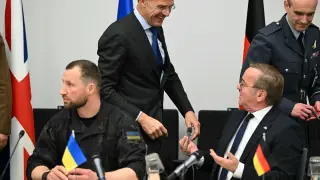
German Defense Minister Boris Pistorius dismissed U.S. criticism of Ukraine's deep-strike operations inside Russia as 'quite a stupid thing,' arguing that targeting Russian military infrastructure is justified amid ongoing attacks on Ukrainian civilians. The remarks were made during a NATO meeting in Brussels, highlighting growing tensions among NATO allies over Ukraine's conduct of the war. Pistorius emphasized Kyiv's right to strike strategic facilities supporting Russia's war effort.
On November 17, 2026, German Defense Minister Boris Pistorius delivered a sharp rebuke to U.S. criticism of Ukraine’s long-range strikes inside Russia during a NATO meeting in Brussels, calling such criticism “quite a stupid thing.” The remarks followed comments by U.S. Under Secretary of Defense for Policy Elbridge Colby, who questioned the strategic value of Ukraine’s deep-strike campaign, arguing that attacks on Russian oil facilities and commercial infrastructure had not accelerated the end of the war and might even harden Moscow’s resolve. Pistorius countered that targeting military infrastructure supporting Russia’s war effort was a legitimate and necessary response to ongoing Russian strikes against Ukrainian civilian infrastructure—particularly energy, water, and heating systems—which he described as “terrorism.” British Defense Secretary Wes Streeting echoed this stance, asserting that deep strikes had weakened Russian military capabilities and helped save lives. Ukrainian Defense Minister Yevhenii Khmara reaffirmed Kyiv’s right to self-defense, citing a recent attack on the Crimean bridge linking occupied Crimea to Russia as a proportional response to Moscow’s persistent assaults. The exchange highlights growing tensions within NATO over the conduct of Ukraine’s war effort, with Germany and the UK supporting Kyiv’s strategy while the U.S. expresses strategic skepticism.
The deeper context involves years of Western support for Ukraine’s defensive posture, including arms deliveries and intelligence sharing, but increasing debate over how far Kyiv should be permitted to strike inside Russia. While NATO has consistently backed Ukraine’s right to self-defense under international law, the U.S. position reflects a broader concern about escalation risks and the potential for prolonged conflict. The U.S. appears focused on diplomatic pathways and de-escalation, whereas Germany and the UK emphasize military effectiveness and deterrence. What remains unresolved is whether the U.S. will adjust its policy to align more closely with allies or maintain its current stance, potentially affecting unity in future defense coordination. It is not yet known how this rift may influence arms transfers or intelligence cooperation, nor whether other NATO members will follow suit in openly challenging Washington’s position.
The open disagreement between Germany and the U.S. over Ukraine’s deep-strike operations could strain transatlantic military coordination, particularly if it leads to inconsistent policy guidance for Kyiv. While German and British support may embolden Ukraine to continue its offensive strategy, U.S. hesitation may create uncertainty about long-term strategic alignment. This could affect the flow of advanced weaponry—such as precision-guided munitions or long-range systems—whose deployment may hinge on political consensus among allies. The broader impact may extend to NATO’s cohesion, especially if other members perceive the U.S. as undermining collective defense doctrine by questioning a member state’s right to retaliate. A comparable precedent is the 2014 debate over arming Ukraine, when Western hesitation was seen as weakening deterrence. Today, the risk is not just of delayed support but of strategic divergence that could complicate unified messaging in future negotiations. What may follow is increased diplomatic maneuvering within NATO, with Germany and the UK possibly seeking to formalize their position through joint statements or policy papers. The next key development will be whether the U.S. adjusts its public rhetoric—or if internal debates lead to a shift in defense strategy that could influence Ukraine’s battlefield calculus.