Latin America Aims for 70% Renewable Power by 2035 as Chile Targets $13 Billion in Annual Energy Investment
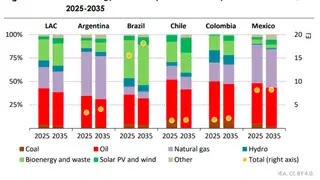
Renewable electricity generation in Latin America and the Caribbean is projected to reach 70% of total power generation by 2035, up from two-thirds today, driven by hydropower, solar, and wind. Chile is expected to invest $13 billion annually in energy infrastructure to support this transition. While droughts threaten hydropower reliability, expanding solar and wind capacity, along with storage, is key to maintaining grid stability.
By 2035, renewable electricity is projected to supply 70% of total power generation in Latin America and the Caribbean, up from two-thirds today, according to the International Energy Agency’s 2026 World Energy Outlook. This shift is driven primarily by hydropower, solar photovoltaics (PV), and wind energy, with solar and wind accounting for most of the recent growth. Countries like Costa Rica and Paraguay already generate nearly all their electricity from renewables. However, climate variability—particularly droughts linked to El Niño and La Niña—threatens the reliability of hydropower, which supplied about 45% of regional electricity in 2015. In response, nations are diversifying their energy mix and investing heavily in storage and grid infrastructure. Chile stands out as a major player, with its energy transition roadmap projecting annual energy investment to rise from $4.5 billion in the previous decade to nearly $13 billion by 2035—a 189% increase. This includes investments in solar, wind, storage, electrified transport, and industrial decarbonization. Chile’s fossil fuel imports totaled $14 billion in 2024, with potential increases by 2026, but the transition pathway aims to reduce this to $3 billion by 2050. Meanwhile, Brazil is expected to boost biofuel production from 0.6 million barrels of oil equivalent per day to nearly 1 million by 2035. Electric vehicle adoption is also rising, with EVs projected to make up 25% of new car sales by 2035, supported by policies like tax exemptions in Colombia and Uruguay, and Chile’s vehicle efficiency regulations. The long-term success of this transition hinges on sustained investment, climate resilience, and infrastructure modernization.
The shift toward 70% renewable electricity in Latin America could significantly reduce regional dependence on imported fossil fuels, lowering trade deficits and enhancing energy security—particularly for countries like Chile, which currently spends heavily on fuel imports. This transition may also stimulate job creation in renewable manufacturing, grid modernization, and battery storage, especially in nations with strong policy frameworks. The growth of electric mobility, exemplified by Chile’s large electric bus fleet and Brazil’s expanding EV infrastructure, could reshape urban transport systems and reduce urban air pollution. However, the reliance on hydropower remains vulnerable to climate change, meaning that without robust storage and diversified generation, grid stability could be at risk. A comparable precedent is the Nordic region’s transition to renewables, which succeeded through long-term planning, cross-border grid integration, and strong public investment. What remains uncertain is whether current policy commitments will be maintained amid economic volatility or political shifts. The success of this transition may depend on continued international financing, critical mineral supply chains, and the ability to scale storage technologies. Monitoring investment flows, grid resilience, and policy enforcement will be crucial in the coming years.