German Chancellor Merz Warns Against New Yalta Division of Europe Following Trump-Putin-Xi Summit
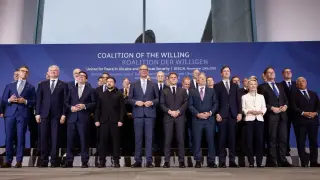
German Chancellor Friedrich Merz rejected the idea of a new Yalta-style division of Europe during a summit in Berlin, using pieces of the Berlin Wall as a symbolic warning. His remarks followed a trilateral meeting in Shenzhen between US President Donald Trump, Russian President Vladimir Putin, and Chinese leader Xi Jinping, which excluded Ukraine from its peace declaration. Merz emphasized that Europe would not accept a new geopolitical partition like the one that occurred after World War II.
On November 19, 2026, German Chancellor Friedrich Merz delivered a stark warning against a new geopolitical division of Europe during the “Coalition of the Willing” summit in Berlin, explicitly rejecting the idea of a “Yalta 2” following a trilateral meeting in Shenzhen between U.S. President Donald Trump, Russian President Vladimir Putin, and Chinese leader Xi Jinping. The Shenzhen summit concluded with a four-point declaration on UN reform, energy, ICC reform, and nuclear risk reduction—omitting any mention of Ukraine’s sovereignty, territorial integrity, or the ongoing war. Merz criticized the gathering as a “photo op,” emphasizing that decisions affecting Europe’s security must not be made without the participation of affected nations like Ukraine and its European allies. In a symbolic gesture, he distributed fragments of the Berlin Wall to summit participants, drawing a direct parallel between the Cold War-era division of Europe and the perceived threat of a new great-power pact that could marginalize democratic states. The Berlin summit, attended by leaders including Ukrainian President Volodymyr Zelensky, French President Emmanuel Macron, British Prime Minister Andy Burnham, and European Commission President Ursula von der Leyen, underscored a unified European stance against unilateral arrangements. Merz suggested that future peace talks could involve Ukraine, Russia, the U.S., and European representatives, possibly in a neutral venue such as the United Arab Emirates, though no timeline was provided. The absence of any commitment to end Russia’s invasion in Shenzhen has heightened concerns that great-power diplomacy may sideline Kyiv and undermine collective security efforts.
Merz’s invocation of Yalta reflects deepening anxiety across Europe about the potential for a new Cold War-style realignment, where major powers negotiate outcomes without input from those most affected. The symbolic use of the Berlin Wall underscores a collective memory of division and oppression, resonating with public sentiment in Germany and across Eastern Europe, where fears of renewed geopolitical fragmentation remain acute. The omission of Ukraine from the Shenzhen declaration could embolden revisionist powers and erode trust in multilateral institutions, potentially weakening NATO and EU cohesion if perceived as sidelined. Comparable to the 1945 Yalta Conference, which entrenched Soviet influence in Eastern Europe, this moment may signal a shift toward a multipolar order where democratic norms are secondary to strategic convenience. While the U.S. and China may seek to project stability through high-level diplomacy, the lack of tangible outcomes risks undermining diplomatic credibility. What remains uncertain is whether the European coalition can sustain pressure on the U.S. and its partners to ensure Ukraine’s voice remains central in any future negotiations. The coming months may reveal whether European unity can counterbalance great-power maneuvering—or if fragmented alliances will allow new divisions to take root.