China Seeks Global Mediator Role Amid Trilateral Talks in Shenzhen
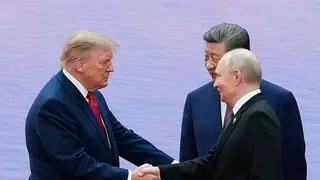
Chinese President Xi Jinping hosted U.S. President Donald Trump and Russian President Vladimir Putin in Shenzhen for trilateral talks on November 18, aiming to position China as a global peacemaker. While Xi faces domestic and international pressures, he leveraged the summit to advance strategic interests, including managing regional tensions and enhancing China’s diplomatic influence, despite risks of unpredictable U.S. statements.
On November 18, 2026, Chinese President Xi Jinping hosted U.S. President Donald Trump and Russian President Vladimir Putin in Shenzhen during the sidelines of the Asia-Pacific Economic Cooperation (APEC) summit. The trilateral meeting marked a high-profile diplomatic effort by Beijing to position itself as a global mediator amid escalating international tensions, particularly over the ongoing war in Ukraine and U.S.-Iran conflict. While the summit was framed as a push for peace, it occurred amid significant domestic and international pressures for all three leaders: Putin faced economic strain and military stagnation after nearly five years of war in Ukraine, Trump grappled with rising diesel prices due to Strait of Hormuz disruptions and a weakened congressional position after midterm elections, and Xi sought to project stability and strategic influence despite regional challenges. Beijing’s interest in hosting the talks was not purely altruistic; it aimed to showcase China’s role as a key global player, reinforcing its image as a responsible power capable of facilitating dialogue. However, Chinese officials have consistently avoided binding commitments, as seen in their non-binding “12-point” position on Ukraine and “six common understandings” with Brazil, which emphasize de-escalation without enforcement mechanisms. Analysts like Temur Umarov and Filip Rudnik note that China prefers symbolic engagement over active mediation, which would require difficult compromises and accountability. Moscow, increasingly isolated from Western markets, remains dependent on Chinese exports of dual-use goods and energy purchases at discounted rates, while Beijing benefits from expanded market access in Russia. The long-term trajectory of Sino-Russian cooperation—especially in challenging U.S. global hegemony—remains a key strategic goal, though the extent of China’s willingness to mediate real conflicts remains uncertain.
The Shenzhen trilateral meeting could signal a shift in how global power dynamics are negotiated, with China increasingly positioning itself as a diplomatic arbiter without assuming the risks of enforcement. While not a formal peace process, the event may bolster China’s soft power and influence in multilateral forums, potentially reshaping perceptions of its role in global governance. If Beijing continues to promote itself as a neutral mediator, it may attract other nations seeking alternatives to Western-led diplomacy, especially in regions affected by U.S.-led conflicts. However, the lack of binding commitments raises questions about the credibility of such efforts—similar to how past diplomatic gestures by non-aligned states were seen as symbolic rather than transformative. Markets may respond cautiously, with energy and trade flows between China and Russia likely to remain stable, but investors may remain wary of geopolitical risks tied to China’s growing diplomatic footprint. The U.S. may view the summit as a challenge to its traditional leadership in global diplomacy, possibly prompting a reevaluation of its engagement with multilateral institutions. What remains unclear is whether China will move beyond rhetoric to play a more active role in conflict resolution, or if this event was primarily a strategic image-building exercise. The coming months will reveal whether Beijing’s diplomatic overtures translate into tangible influence or remain symbolic gestures in a multipolar world still dominated by military and economic power.