Xi Welcomes Trump at Apec Summit as Putin Declares Europe in 'Humiliating Decline'
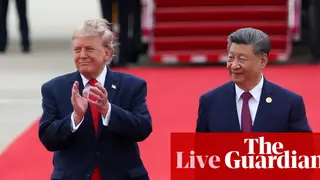
Chinese President Xi Jinping welcomed U.S. President Donald Trump to the Apec summit in Shenzhen, where global leaders gathered amid rising geopolitical tensions. Russian President Vladimir Putin delivered a speech claiming Europe is in a state of 'humiliating decline,' reflecting growing friction among major powers. The summit, hosted in a Chinese tech hub, highlighted shifting alliances and strategic posturing in the Asia-Pacific region.
Chinese President Xi Jinping hosted U.S. President Donald Trump at the Apec summit in Shenzhen, a high-tech city in southern China, marking a significant diplomatic meeting amid heightened global tensions. The gathering brought together leaders from across the Asia-Pacific region, with the event serving as a platform for strategic signaling amid shifting international alliances. Russian President Vladimir Putin, though not attending in person, delivered a speech asserting that Europe is undergoing a "humiliating decline," a statement that underscores the growing divergence in geopolitical narratives among major powers. The summit, held in a Chinese technological hub, emphasized the region’s increasing centrality in global affairs and highlighted China’s role as a host and influencer in shaping regional dynamics.
The backdrop to this summit includes escalating geopolitical friction, particularly between the United States and China, as well as Russia’s increasingly assertive stance in global diplomacy. While the specific details of discussions between Xi and Trump remain undisclosed, the mere presence of both leaders at the same event signals a moment of cautious engagement despite broader strategic competition. Putin’s remarks reflect Russia’s effort to reposition itself as a counterweight to Western influence, particularly in Europe, and may be intended to strengthen ties with non-Western powers. The involvement of these three leaders—each representing a major global power—highlights the multipolar nature of current international relations.
What remains uncertain is the depth of substantive agreements reached during the summit, the extent of cooperation between the U.S. and China on regional issues, and how Putin’s comments may influence diplomatic outreach to Asia-Pacific nations. The next steps could include follow-up bilateral meetings or multilateral initiatives, but these are not yet known.
The Apec summit’s proceedings could influence global trade dynamics, especially in the Asia-Pacific, where supply chains and digital infrastructure are central to economic stability. The presence of top leaders from the U.S., China, and Russia may signal a temporary pause in overt confrontation, but long-term trust remains fragile. If diplomatic engagement continues, it could ease market volatility in tech and energy sectors, particularly in regions dependent on cross-border cooperation. However, Putin’s rhetoric may deepen divisions within Europe, potentially accelerating efforts to diversify alliances and strengthen regional defense, which could indirectly affect Asian economies reliant on European demand. A comparable precedent is the 2009 Apec summit in Singapore, where leaders also used the forum to signal cooperation amid economic uncertainty. Yet today’s context is more polarized, with deeper ideological and military rifts. What may unfold is a pattern of strategic engagement without resolution—diplomatic theater that manages tensions but does not dismantle underlying conflicts. The next phase to watch is whether these summit interactions lead to concrete policy shifts or remain symbolic gestures in an increasingly fragmented global order.