Russia Faces Weakened Influence in Balkans After Vucic’s Fall
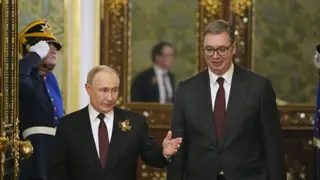
The departure of Serbian leader Aleksandar Vucic, seen as Russia’s key European ally, marks a significant shift in regional dynamics, with Serbia’s new government pursuing reforms and greater media freedom. Despite Russia’s renewed diplomatic efforts, including trilateral talks with the US and China, its influence in the Balkans is diminishing. The region’s move toward EU integration and anti-corruption measures undermines Moscow’s strategic foothold.
In November 2026, the political landscape in the Balkans shifted significantly with the departure of Serbian President Aleksandar Vucic, long regarded as Russia’s most influential European ally. His exit marks a pivotal moment in regional geopolitics, as Serbia’s new government signals a departure from the pro-Russian stance of the past decade. The change comes amid broader reforms aimed at strengthening democratic institutions, promoting media freedom, and combating corruption—policies that directly challenge Moscow’s strategic interests in the region. This shift coincides with Russia’s intensified diplomatic outreach, including trilateral talks with the U.S. and Ukraine on post-war European security and an unprecedented meeting in Shenzhen, China, between Russian, American, and Chinese leaders. Despite these efforts, the fall of Vucic underscores a growing erosion of Russian influence in the Balkans. The region’s increasing alignment with the European Union—evidenced by ongoing accession negotiations, particularly with countries like North Macedonia—further undermines Moscow’s foothold. Vucic’s tenure had been characterized by a balancing act between the West and Russia, but his replacement may signal a definitive pivot toward EU integration, weakening Russia’s leverage. The absence of a clear successor to Vucic’s pro-Moscow posture raises questions about Serbia’s future foreign policy direction, especially as EU accession criteria demand transparency and institutional reform.
The fall of Vucic could accelerate the Balkans’ integration into European institutions, potentially reshaping regional stability and economic development. Countries like North Macedonia and Serbia may see faster progress toward EU membership, which could stimulate investment, improve governance, and strengthen rule-of-law mechanisms. However, this shift may also strain relations with Russia, possibly leading to retaliatory measures or increased disinformation campaigns aimed at destabilizing reform efforts. The broader impact may extend to energy markets, as reduced Russian influence could open opportunities for diversified energy suppliers, particularly in natural gas and renewable infrastructure. A comparable case is the 2014 Euromaidan revolution in Ukraine, where a pro-Western shift led to long-term geopolitical realignment and economic reform, though also triggered conflict. In the Balkans, similar dynamics may unfold, but with less immediate violence. What remains uncertain is whether the new Serbian leadership can sustain reform momentum amid domestic political pressures or external interference. Monitoring the pace of EU accession talks and the resilience of anti-corruption initiatives will be crucial indicators of whether this shift is enduring or temporary.