ESA Selects Plasma Observatory Mission to Study Solar Energy Flow Through Earth’s Magnetosphere
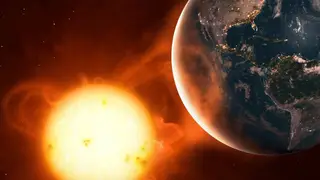
The European Space Agency has selected the Plasma Observatory as its next M-class science mission, to be launched in the late 2030s. The mission will deploy seven coordinated spacecraft to study how energy from the Sun moves through Earth’s magnetic field across multiple scales. The goal is to better understand plasma, the most abundant form of visible matter, and its role in space weather phenomena like solar storms and auroras.
The European Space Agency (ESA) has selected the Plasma Observatory as its next M-class science mission, designated M7, with a planned launch in the late 2030s. This mission will deploy seven coordinated spacecraft arranged in two nested tetrahedral formations sharing one central spacecraft, enabling simultaneous measurements across both ion-scale (small, fast processes) and fluid-scale (large, slower dynamics) regions of Earth’s magnetosphere. This approach marks a significant advancement over previous missions like ESA’s Cluster and NASA’s Magnetospheric Multiscale (MMS), which used four spacecraft and could only study one scale at a time. The Plasma Observatory aims to resolve how solar energy flows through Earth’s magnetic field, particularly how plasma—comprising over 99% of visible matter in the universe—transfers energy across vastly different spatial scales. The mission’s primary goal is to understand the mechanisms behind space weather phenomena such as auroras and solar storms, which can disrupt satellite operations, GPS systems, and power grids. ESA’s Matt Taylor, Study Scientist for the mission, emphasized that Earth’s magnetosphere serves as a natural laboratory for studying these universal plasma processes. The decision follows years of scientific advocacy and prior mission planning, with the M7 slot previously considered for other projects, but now prioritized for this ambitious multi-scale study.
The Plasma Observatory could significantly improve space weather forecasting, which may help protect critical infrastructure like satellite networks and power grids from solar storm disruptions. As society becomes increasingly reliant on space-based technologies, even minor disruptions can have cascading effects on global communications, navigation, and financial systems. The mission’s ability to study plasma dynamics across multiple scales simultaneously may offer insights that current models lack, potentially leading to more accurate predictive tools. A comparable precedent is NASA’s MMS mission, which revolutionized understanding of magnetic reconnection in the 2010s—demonstrating how foundational space science can lead to practical applications. If the Plasma Observatory delivers similar breakthroughs, it may influence future satellite design, operational protocols, and international space weather monitoring efforts. However, the mission’s impact remains uncertain until data is collected, and its success depends on the precision of spacecraft coordination and instrument calibration. What to watch for includes the development of new data analysis techniques and potential collaborations with agencies like NASA, which may integrate findings into broader heliospheric models.