NASA's MESSENGER spacecraft completes historic journey to Mercury after eight-year voyage
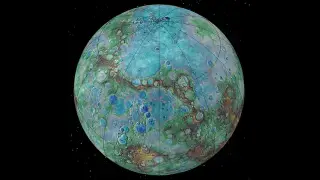
After an eight-year journey through the inner solar system, NASA's MESSENGER spacecraft successfully entered orbit around Mercury, becoming the first mission to do so. The mission overcame significant challenges due to the planet's intense gravity and proximity to the Sun, requiring multiple gravity assists from Earth, Venus, and Mercury itself. This achievement marks a major milestone in planetary exploration and provides unprecedented data on Mercury's geology and magnetic field.
After an eight-year journey through the inner solar system, NASA's MESSENGER spacecraft achieved a historic milestone by successfully entering orbit around Mercury, becoming the first mission to accomplish this feat. The spacecraft, launched to explore the solar system’s innermost planet, had to navigate extreme conditions due to Mercury’s intense gravitational pull and its proximity to the Sun. To manage these challenges, the mission employed multiple gravity assists—using Earth once, Venus twice, and Mercury itself three times—to gradually slow down and achieve orbital insertion. This complex trajectory was essential for conserving fuel and ensuring precise control during the critical orbital insertion maneuver. The mission’s success marks a major advancement in planetary science, offering the first comprehensive orbital data on Mercury’s surface geology, composition, and magnetic field.
The journey was the culmination of years of planning and engineering, driven by NASA’s long-standing interest in understanding Mercury’s unique characteristics, such as its large iron core and weak magnetic field. Prior to MESSENGER, only two spacecraft—Mariner 10 in the 1970s—had flown by Mercury, providing limited data. The decision to pursue an orbital mission was based on the need for sustained observation to resolve longstanding scientific questions. NASA, as the leading space agency in this endeavor, sought to expand human knowledge of terrestrial planets and improve models of planetary formation. The mission’s success demonstrates the technical capability to conduct deep-space exploration under extreme environmental constraints.
What remains unresolved is the full analysis of the data collected during the mission’s primary and extended phases. While the spacecraft completed its planned orbit, the long-term implications of the findings—particularly regarding Mercury’s magnetic field and surface composition—are still being evaluated. Future missions may build on these results, though no specific follow-up has been announced. The exact timeline for data release and scientific publication is not yet known.
The successful orbit of MESSENGER around Mercury could reshape public understanding of planetary formation and the dynamics of the inner solar system. As the first mission to orbit the planet, it provides foundational data that may influence future space exploration strategies, especially for missions to other hot, gravity-intensive environments. Scientists and educators may use the findings to inspire interest in planetary science and engineering, potentially impacting STEM education and workforce development. The mission’s success may also bolster public support for continued investment in space science, particularly in the face of budgetary constraints. Institutionally, this achievement strengthens NASA’s reputation as a leader in deep-space exploration, potentially influencing international collaboration on future missions. Comparable to the 1997 Mars Pathfinder mission, which reinvigorated public interest in planetary science, MESSENGER’s success may spark renewed enthusiasm for space exploration. However, the broader market impact—such as commercial space ventures or satellite technology—remains indirect and speculative. What to watch for next is how quickly the scientific community integrates these findings into broader models of planetary evolution, and whether they prompt new mission proposals to Mercury or similar environments.