Finland Reports Drone Strike on Russian Vessel in Eastern Baltic Sea
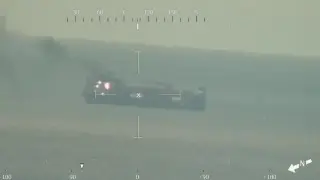
Finland’s military detected a drone attack on a Russian cargo ship in international waters west of Suursaari in the eastern Gulf of Finland on November 21, 2026, causing the vessel to catch fire and drift toward Finnish waters. Finnish Border Guard confirmed the fire posed no immediate threat to other ships, while Helsinki notified NATO and imposed temporary maritime and airspace restrictions in the region. The Finnish Ministry of Defense did not attribute responsibility for the attack.
On November 21, 2026, Finnish military forces detected a drone strike on a Russian cargo vessel in international waters west of Suursaari in the eastern Gulf of Finland. The attack caused the ship to catch fire and begin drifting toward Finnish territorial waters, prompting immediate response from the Finnish Border Guard. Authorities confirmed that the fire did not pose an immediate threat to other vessels, but the incident prompted Helsinki to impose temporary maritime and airspace restrictions in the region. Finland promptly notified NATO of the event, underscoring the growing strategic sensitivity of the Baltic Sea. The Finnish Ministry of Defense did not assign responsibility for the attack, leaving the origin of the drone operation unknown. The Gulf of Finland, a vital maritime corridor for Russia linking the Baltic Sea to Saint Petersburg, has increasingly become a flashpoint since Russia’s 2022 invasion of Ukraine, with Western nations accusing Moscow of conducting hybrid operations in the region. The attack aligns with a broader pattern of Ukraine’s long-range strikes against Russian infrastructure beyond the front lines, though no direct link to Kyiv has been established in this case. The involvement of Finland, a non-NATO member with strong ties to the alliance, signals a deepening regional concern over the security of the Baltic Sea. What remains unresolved is whether the drone was launched from Ukrainian territory, a Western nation, or a third party, and how NATO will respond to this escalation in international waters.
The incident could signal a significant shift in the Baltic Sea’s security dynamics, potentially escalating tensions between NATO and Russia in a region previously seen as relatively stable. Finland’s response—imposing temporary restrictions and alerting NATO—may prompt other Baltic states to reassess their maritime security protocols, possibly leading to increased surveillance and joint exercises. The attack on a Russian vessel in international waters, if confirmed as deliberate, may embolden non-state actors or allied forces to conduct similar operations, raising the risk of unintended escalation. Historically, the 2014 annexation of Crimea and the subsequent conflict in Eastern Ukraine set a precedent for the use of hybrid tactics in contested regions, but this event marks a new frontier: the use of drones in international waters near NATO’s periphery. The broader impact may include heightened military readiness across the Baltic, affecting shipping routes, insurance premiums for maritime transport, and regional trade flows. What to watch for next is whether NATO will conduct a formal investigation or issue a joint statement, and whether Finland will pursue further diplomatic or defensive measures. The lack of attribution could also lead to diplomatic ambiguity, where actions are taken without clear accountability—a scenario that may become more common in future conflicts.