Zelensky Reveals 109 Prior Attacks on Ukrainian Bridges Before Crimean Bridge Strike
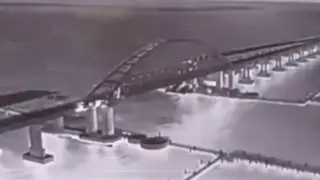
President Volodymyr Zelensky disclosed during a November 21, 2026, meeting with British Defense Secretary Wes Streeting that Russian forces conducted 109 separate missile and drone attacks on Ukrainian bridges before Ukraine’s retaliatory strike on the Crimean Bridge on November 17. He cited evidence of Russian military vehicles using the crossing, justifying the operation. Ukrainian Defense Minister Yevhenii Khmara estimated that removing the collapsed road arch would take several months.
On November 17, 2026, Ukrainian forces conducted a targeted strike on the Crimean Bridge, destroying its main road arch and disrupting transit across the Kerch Strait. President Volodymyr Zelensky revealed during a meeting with British Defense Secretary Wes Streeting on November 21 that this operation was preceded by 109 separate missile and drone attacks by Russian forces on Ukrainian bridges, a figure he emphasized represented distinct incidents, not just munitions used. He cited visual evidence of Russian military vehicles—including tanks and artillery—using the Crimean Bridge, arguing that its function as a military supply route justified the strike. Ukrainian Defense Minister Yevhenii Khmara confirmed that Russian engineers and divers are currently assessing the damage, estimating that removing the collapsed road arch will take several months. The strike followed earlier Ukrainian operations, including a Neptune cruise missile attack on the railway tracks on November 19, which further damaged the crossing. In response, Russia has allocated 20 billion rubles ($244 million) from its reserve fund to accelerate construction of a bypass around occupied Mariupol and widen the R-280 highway, indicating efforts to maintain logistical access to Crimea despite the disruption. The situation remains unresolved, with no clear timeline for full restoration and ongoing assessments of the bridge’s structural integrity.
The Crimean Bridge strike underscores the evolving nature of asymmetric warfare in Eastern Europe, where infrastructure becomes both a strategic target and a symbol of national resilience. The destruction of the road arch may disrupt Russian military logistics to Crimea, potentially affecting troop movements and supply chains, though Russia’s investment in alternative routes suggests a long-term adaptation strategy. Civilian populations in Crimea and southern Ukraine may face prolonged disruptions in trade and travel, with ripple effects on regional economies. Comparable to the 2018 U.S. drone strike on a Syrian bridge, this incident highlights how targeted infrastructure attacks can shift military dynamics without direct combat. The broader impact may include increased pressure on international insurers and logistics firms to reassess risk in conflict zones. What remains uncertain is whether Ukraine will conduct further strikes on other key infrastructure, and how Russia’s response—particularly in terms of rebuilding or reinforcing the bridge—will evolve. The coming months will likely reveal whether this strike marks a shift toward more frequent, high-impact operations against strategic assets, or a one-off escalation.