Ancient Tunnel at Arsameia May Have Been a Pilgrimage Route into the Sacred Dark
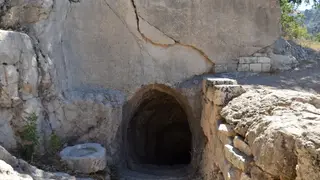
A 158.1-meter-deep stone staircase leading into a cliff at Arsameia on the Nymphaios River in Turkey has long puzzled scholars. A new study by Lennart Wouter Kruijer of Leiden University, published in the Journal of Roman Archaeology on November 19, 2026, suggests the tunnel served as a ritual passage for ancient pilgrims. The findings indicate the site may have had religious significance tied to spiritual descent and transformation.
A 158.1-meter-deep stone staircase carved into a cliff at Arsameia, located along the Nymphaios River in modern-day Turkey, has long baffled archaeologists due to its depth and apparent lack of utilitarian function. A new study led by Lennart Wouter Kruijer of Leiden University, published in the Journal of Roman Archaeology on November 19, 2026, proposes that this subterranean passage functioned not as a practical route but as a ritual pilgrimage path. The research suggests the site held religious significance, possibly tied to spiritual descent and transformation, with the act of descending into the darkened tunnel symbolizing a rite of passage. The specific measurement of 158.1 meters underscores the deliberate effort involved, implying that the journey was intentional and likely structured around ceremonial practices. Prior to this study, the site’s purpose remained speculative, with earlier interpretations ranging from defensive structures to agricultural access, though none accounted for the depth and orientation of the passage.
Kruijer’s work builds on earlier archaeological investigations at Arsameia, a site known for its Hellenistic and Roman-era remains, but this is the first to focus on the tunnel’s symbolic and ritual dimensions. The study’s publication in a peer-reviewed journal signals academic validation of the pilgrimage hypothesis, potentially shifting scholarly consensus. Leiden University, as the institution behind the research, advances its reputation in ancient religious studies and material culture analysis. The findings may prompt re-evaluation of other similarly deep, narrow passages in the region, especially those located near sacred landscapes. What remains unresolved is whether the tunnel was used continuously over time, whether it connected to other known religious sites, or if inscriptions or artifacts within the passage have yet to be discovered. Future excavations and non-invasive surveys may clarify these points.
The discovery could influence how ancient religious practices are interpreted in the broader Eastern Mediterranean, particularly in regions where sacred geography and ritual movement were central. If the Arsameia tunnel served as a pilgrimage route, it may reflect a widespread cultural pattern seen in other ancient sites, such as the Labyrinth of Egypt or the sacred caves of Eleusis, where physical descent symbolized spiritual transformation. This could prompt renewed interest in similar subterranean features across Anatolia and the Levant, potentially affecting heritage tourism and conservation priorities. Institutions managing archaeological sites may reconsider how to present such spaces to the public—balancing access with preservation of their ritual integrity. The study may also inspire interdisciplinary collaborations between archaeologists, religious scholars, and cognitive scientists exploring how physical space shapes spiritual experience. What to watch for next is whether other researchers replicate Kruijer’s methodology at comparable sites, and whether digital reconstructions or virtual tours emerge to help visualize the pilgrimage experience.