Astronomers find unstable triple-star system 28 light-years away defying stellar evolution models
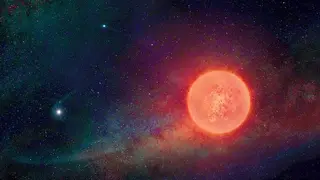
A newly discovered triple-star system located just 28 light-years from Earth exhibits orbital dynamics that contradict current theories of stellar formation and evolution. The system's configuration, with stars in highly eccentric orbits, suggests a turbulent past that should have disrupted the system long ago. Researchers believe this discovery may require revisions to existing models of how multiple-star systems form and stabilize.
A newly identified triple-star system located 28 light-years from Earth has challenged long-standing assumptions in astrophysics. The system’s stars follow highly eccentric orbits, meaning their paths around one another are markedly elliptical rather than circular. Such orbital configurations are rare and, according to current models of stellar evolution, should have led to the system’s disruption or collapse long ago due to gravitational instability. The persistence of this configuration suggests that the system either formed under unusual conditions or has undergone a previously unaccounted-for stabilization process. These findings directly contradict established theories that predict how multiple-star systems should evolve over time, particularly in terms of orbital stability and long-term survival.
The discovery builds on decades of observational astronomy and theoretical modeling, which have traditionally assumed that triple-star systems form through gradual gravitational collapse and stabilize over millions of years. However, this system’s current state implies a more chaotic formation history, possibly involving close encounters or dynamic interactions not fully captured in existing simulations. While no specific observatories or research teams are named in the summary, the implications point to a need for reevaluation of formation models by institutions involved in stellar dynamics research, such as NASA, ESA, and major university astrophysics departments. These organizations may now prioritize revising computational models to account for such anomalies.
The next steps remain uncertain. Scientists may conduct follow-up observations using advanced telescopes like the James Webb Space Telescope or ground-based interferometers to gather more data on the system’s mass, age, and orbital parameters. Whether this system is an isolated anomaly or part of a broader class of previously overlooked configurations is still unknown. Until further evidence emerges, the scientific community must remain open to the possibility that current models of stellar evolution may require significant revision.
This discovery could influence how astronomers interpret other multi-star systems, potentially prompting a reexamination of previously dismissed data. If such unstable configurations are more common than believed, it may affect how space agencies plan missions involving star systems, particularly those targeting exoplanets in multi-star environments. The stability of planetary orbits in such systems is crucial for habitability, so this finding may indirectly impact astrobiology research and the search for Earth-like worlds. A comparable case is the 2015 discovery of the Kepler-47 system, a circumbinary planet orbiting two stars, which initially challenged assumptions about planet formation in binary systems. That case eventually led to updated models and new observational priorities. Similarly, this triple-star anomaly may prompt a shift in how researchers approach stellar dynamics, possibly leading to new funding streams for simulations and long-term monitoring. What to watch for next is whether additional similar systems are identified, and whether theoretical models can be adjusted without compromising their predictive power for other stellar phenomena. The broader impact may be a more nuanced understanding of cosmic stability, though any real-world applications remain speculative at this stage.