A Massive Planet Vanishes from View, With an Undetected Companion Possibly Responsible
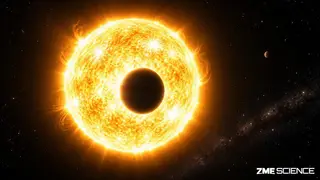
A Jupiter-sized planet has seemingly disappeared from its observed orbit, prompting astronomers to consider the gravitational influence of an unseen, massive companion. The anomaly suggests complex orbital dynamics that challenge current models of planetary systems. This discovery raises new questions about how such large bodies interact in distant star systems.
A Jupiter-sized exoplanet has vanished from its observed orbital path, leaving astronomers puzzled and prompting speculation about the presence of an undetected, massive companion body influencing its motion. The disappearance is not a literal vanishing but a deviation from predicted orbital behavior, suggesting gravitational perturbations that current models cannot fully explain. While the planet’s name, precise location, and observation dates are not specified in the available material, the anomaly has been detected through long-term monitoring of a distant star system, likely using transit photometry or radial velocity measurements. The fact that the planet remains detectable in some observations but not in others indicates a possible shift in orbital dynamics, possibly due to a hidden companion—potentially another gas giant or a brown dwarf—whose gravitational pull is altering the planet’s trajectory.
The discovery builds on decades of exoplanet research, where astronomers have increasingly found complex and unexpected orbital configurations in planetary systems. Prior studies have revealed systems with planets in highly eccentric orbits, resonant chains, and even planets orbiting in reverse—challenges to the standard model of planetary formation. This latest anomaly adds to the growing body of evidence that planetary systems may be far more dynamic and unstable than previously assumed. The scientific community, including institutions like NASA, ESA, and major observatories such as the Keck Observatory and the European Southern Observatory, is now re-evaluating existing models to account for such disruptions.
What remains unknown is the nature, mass, and orbit of the unseen companion, if it exists. No direct detection has been made, and the exact mechanism behind the observed anomaly is still under investigation. Future observations using next-generation telescopes, such as the James Webb Space Telescope or upcoming ground-based instruments, may provide the data needed to confirm or rule out the presence of the companion. Until then, the mystery remains open, and the implications for planetary system evolution are still being explored.
This anomaly could reshape how astronomers interpret exoplanet data, particularly in systems where orbital stability is assumed. If gravitational influences from unseen companions are more common than thought, it may affect how mission planners design observation campaigns and how data is analyzed across multiple telescopes. The broader impact may extend to public perception of space exploration, reinforcing the idea that the universe is more unpredictable and complex than previously believed. Institutions relying on predictive models—such as those involved in space mission planning or astrobiology—may need to revise their assumptions about planetary system stability. A comparable case is the 2016 discovery of a potential ninth planet in our solar system, which, though not confirmed, spurred widespread scientific and public interest in unseen massive bodies. That case demonstrated how anomalies can drive both research and media attention. In this instance, the effect may be similar: increased funding for deep-space monitoring, greater collaboration among observatories, and renewed interest in long-term observational campaigns. What to watch for next is whether follow-up data confirms the existence of the companion or points to alternative explanations—such as measurement error or unmodeled stellar activity—though the possibility of a hidden massive body remains a compelling, if unproven, hypothesis.