ESA Investigates Software Glitch After BepiColombo’s Mercury Orbit Insertion
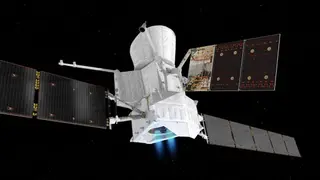
The European Space Agency (ESA) confirmed that BepiColombo successfully entered Mercury’s orbit after a 37-minute thruster burn, but the maneuver ended prematurely due to a software issue. The spacecraft, a joint mission between ESA and JAXA, consists of the Mercury Magnetospheric Orbiter (MPO) and the Mercury Planetary Orbiter (MMO), both now in orbit. Mission teams at ESOC are investigating the anomaly, though the spacecraft remains healthy and operational.
On November 21, 2026, the BepiColombo spacecraft successfully achieved orbit around Mercury, marking the second time any spacecraft has done so after NASA’s MESSENGER in 2011. The maneuver, designed to slow the probe using a 37-minute thruster burn, concluded prematurely due to a software anomaly, according to the European Space Agency (ESA). The burn, executed by the Mercury Planetary Orbiter (MPO)—ESA’s contribution—ended earlier than planned, though the spacecraft remained stable and in contact with mission control at ESA’s European Space Operations Centre (ESOC). The Mercury Magnetospheric Orbiter (MMO), built by Japan’s JAXA, remains attached to the MPO in a stacked configuration following the separation of the Mercury Transfer Module (MTM) in September 2026. The mission, launched on October 20, 2018, took eight years to reach Mercury, with its trajectory including one Earth flyby, two Venus flybys, and six Mercury flybys to manage gravitational acceleration. A solar panel issue had previously delayed the mission by one year. The primary scientific goals include studying Mercury’s origin, composition, magnetic field, and polar water ice deposits, using 11 instruments on the MPO and five on the MMO. The next major step—separating the MMO from the MPO—is scheduled for December 2026, after which both will enter individual polar orbits. The science phase is expected to begin in April 2027. The cause of the software glitch remains under investigation, and while the spacecraft is healthy, the full implications of the shortened burn are not yet known.
The premature termination of BepiColombo’s orbit insertion burn, though resolved without immediate danger, underscores the fragility of deep-space missions where software errors can have cascading consequences. The incident may prompt broader scrutiny of autonomous systems in long-duration spaceflight, particularly as agencies like ESA and JAXA increasingly rely on complex, tightly integrated software for navigation and propulsion. While the immediate risk to the mission appears low, the delay in finalizing orbital configurations could affect the timeline for scientific data collection, potentially impacting research on Mercury’s magnetic field and polar ice—topics of interest to planetary scientists and space policy analysts. The situation echoes the 2011 MESSENGER mission, which also faced technical challenges but ultimately succeeded in its science goals. BepiColombo’s success, despite the glitch, may reinforce confidence in international collaboration—ESA and JAXA’s joint effort is a model for future missions. However, it could also raise questions about software validation protocols in deep-space missions. What’s next may include a reassessment of mission-critical software testing procedures, especially for future planetary orbiters. The broader space community may watch closely for how quickly the team diagnoses and mitigates the issue, as this could influence how agencies approach risk management in upcoming missions.