Milorad Dodik Bolsters Power in Republika Srpska Amid Efforts to Block State-Level Legislation
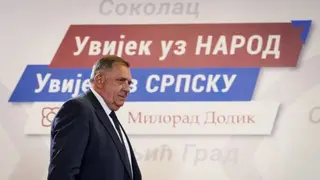
Bosnian Serb leader Milorad Dodik is consolidating political control in Republika Srpska by securing additional parliamentary votes, including from defectors, to strengthen his coalition’s ability to veto state-level legislation. His son is set to lead the government in the entity, while Dodik’s Alliance of Independent Social Democrats (SNSD) has gained two new deputies through party switches. Despite securing a majority in the 83-member assembly, Dodik’s candidate for speaker fell short of the required votes, highlighting ongoing challenges in maintaining unified support.
On November 9, 2026, Milorad Dodik, leader of Republika Srpska’s Alliance of Independent Social Democrats (SNSD), began consolidating political control by offering opposition deputies incentives to switch allegiance, as revealed when he handed opposition leader Nebojsa Vukanovic a list of potential defectors. By November 16, two deputies—Vladimir Copic, elected on the Serbian Democratic Party (SDS) list, and Snjezana Gvozden, formerly of the Safe Srpska Movement (PSS)—had formally joined Dodik’s coalition, increasing the governing bloc from 54 to 56 seats in the 83-member Republika Srpska Assembly. This shift strengthened Dodik’s ability to block legislation at the state level in Bosnia and Herzegovina, where a two-thirds majority is required to override vetoes. Despite this numerical advantage, Dodik’s candidate for speaker, Nenad Stevandic, received only 52 votes, underscoring internal fragility within the coalition. Dodik’s son is set to lead the government in Republika Srpska, signaling a dynastic consolidation of power. The SNSD’s gains were facilitated by Bosnia’s legal provision allowing deputies to retain their seats after switching parties, a mechanism that has enabled strategic realignments. The political maneuvering follows earlier reports of tensions between Dodik’s bloc and opposition forces, particularly after the October 2026 elections, which saw nationalist parties gain ground amid low voter turnout. The outcome of potential complaints over the party switches remains uncertain, but the shift has already altered the balance of power in the entity’s legislature.
Dodik’s consolidation of power in Republika Srpska could deepen political fragmentation across Bosnia and Herzegovina, where state-level governance already faces frequent gridlock. By securing a working majority in the entity assembly, Dodik may further obstruct reforms or constitutional changes that require cross-entity consensus, potentially undermining national cohesion. The defection of deputies from opposition parties, even if legally permissible, may erode public trust in democratic institutions, especially if voters perceive such moves as transactional rather than ideological. This dynamic echoes earlier patterns seen in post-war Bosnia, where ethnic and political elites used coalition manipulation to maintain influence, as in the 2006–2008 period when nationalist leaders similarly exploited procedural rules to stall reform. The broader impact may extend to foreign investment and EU integration efforts, as institutional instability deters long-term commitments. What remains uncertain is whether opposition parties will unite in response or fracture further. The next critical test will be whether Dodik can maintain unity within his coalition, particularly given the speaker vote shortfall. Monitoring the response from the European Union and international mediators will be key, as their engagement could either stabilize or exacerbate tensions.