Indonesia Secures $71.8 Billion in Chinese Investment During President Prabowo’s Visit
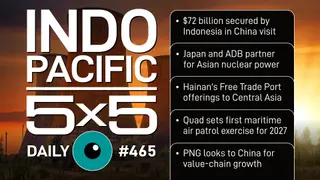
Indonesia secured $71.8 billion in business deals during President Prabowo Subianto’s visit to Shenzhen, China. The largest agreement, worth $50 billion, involves building 10 smart cities through a consortium led by Shaanxi and backed by Indonesia’s sovereign fund Danantara. Additional deals include infrastructure financing, a coal-to-ethanol project, and technology transfers, reflecting deepening economic ties between the two nations.
During a high-profile visit to Shenzhen in November 2026, Indonesian President Prabowo Subianto secured $71.8 billion in business deals with Chinese entities, marking a significant escalation in economic ties between the two nations. The cornerstone agreement, worth $50 billion, involves a consortium led by Shaanxi and backed by Indonesia’s sovereign wealth fund, Danantara, to develop 10 smart cities across Indonesia. Construction is expected to begin early in 2027, signaling a major infrastructure push. Additional deals include a $10 billion infrastructure financing pact with China’s state-owned SDIC, a $1.8 billion coal-to-ethanol project involving Indonesia’s Higher Education Ministry, Pertamina, and Beijing Petrochemical Engineering, and technology transfer initiatives. These developments follow a sharp rise in Indonesia’s trade deficit with China, which reached $21.2 billion in the first nine months of 2026—a 49% year-on-year increase—despite Chinese and Hong Kong investments totaling $17.8 billion in the same period. The agreements reflect Indonesia’s strategic pivot toward deeper economic integration with China, even as it seeks to balance relations with Western partners. The key players include Danantara, the Indonesian sovereign fund; Shaanxi and SDIC, major Chinese state-backed firms; and Indonesian ministries focused on energy, education, and industry. What remains unresolved is the long-term sustainability of such large-scale projects, the environmental and social impact of smart city development, and whether Indonesia can achieve meaningful value addition through these partnerships, especially given its reliance on raw material exports. The full implementation timeline and risk assessments for the projects are not yet public.
The scale of Indonesia’s $71.8 billion deal with China could reshape regional economic dynamics, particularly in Southeast Asia’s infrastructure and industrial development landscape. If realized, the smart city initiative may accelerate urbanization and digital transformation in Indonesia, potentially boosting productivity and attracting further foreign investment. However, such large-scale Chinese-led projects raise concerns about debt sustainability, local job creation, and long-term dependency on Chinese technology and capital. The shift from raw exports to value-added processing, as seen in Papua New Guinea’s push for domestic refining, may mirror Indonesia’s ambitions, but success depends on effective governance and technology transfer—areas where past partnerships have faced challenges. A comparable precedent is China’s Belt and Road Initiative, which has delivered infrastructure but also sparked debt and sovereignty debates in countries like Sri Lanka and Kenya. In Indonesia’s case, the involvement of a sovereign fund like Danantara may offer greater oversight, but transparency remains a key question. The broader impact could include a reconfiguration of supply chains across the Indo-Pacific, with China consolidating its role as a hub for manufacturing and processing. What to watch for next is whether other ASEAN nations follow suit with similar deals, and how regional institutions like the ADB and Quad respond to the growing Chinese economic footprint. The long-term effects on regional security, trade balances, and technological sovereignty remain uncertain.